.png)
.png)
The Rise of Digital Health Technology in Diagnosis, Training, and Monitoring
Digital health technology has become one of the most transformative forces in modern healthcare. From AI-assisted diagnosis and XR-based medical training to real-time patient monitoring and remote care, digital tools are enabling faster workflows, earlier detection, personalized care plans, and greater efficiency across hospitals and clinics. What once required physical presence, manual documentation, or resource-heavy equipment can now be performed virtually, automated intelligently, or analyzed in real time.
As healthcare systems face growing demands, workforce shortages, and rising chronic disease rates, digital technologies provide the precision, scalability, and speed needed to deliver high-quality care. They empower clinicians with better insights, support patients outside hospital walls, and improve medical education with immersive simulations. Digital health technology is no longer a “future trend”—it is the new foundation of modern medicine.
This guide explores what digital health technology is, how it improves diagnosis, training, and monitoring, and why it’s becoming essential for the future of healthcare.
What Is Digital Health Technology?
Digital health technology includes the software, devices, platforms, and intelligent systems that improve healthcare delivery. It integrates AI, XR, mobile tools, data analytics, cloud systems, wearables, telehealth, and digital therapeutics into one connected ecosystem.
It aligns closely with the broader innovations explained in how AI in healthcare is improving patient support, which shows how digital solutions enhance both clinical work and patient experience.
Digital health technologies include:
AI and clinical decision support
XR medical simulation
Telehealth platforms
Wearable monitoring devices
Remote patient monitoring systems
Digital therapeutics
Health data analytics
Digital training simulations
EHR-integrated automation
Cloud-based care platforms
These tools modernize diagnosis, improve training outcomes, and elevate patient monitoring.

Why Digital Health Technology Is Rising Rapidly?
Healthcare demands have outpaced the capacity of traditional systems. Digital health solves multiple pain points:
Shortage of clinical staff
Increasing chronic disease burden
Need for faster diagnosis
Patient demand for remote care
Administrative overload
Training cost limitations
Need for standardization and consistency
As highlighted in the future of healthcare technology innovation, digital transformation is reshaping every clinical workflow.
Digital Health Technology in Diagnosis
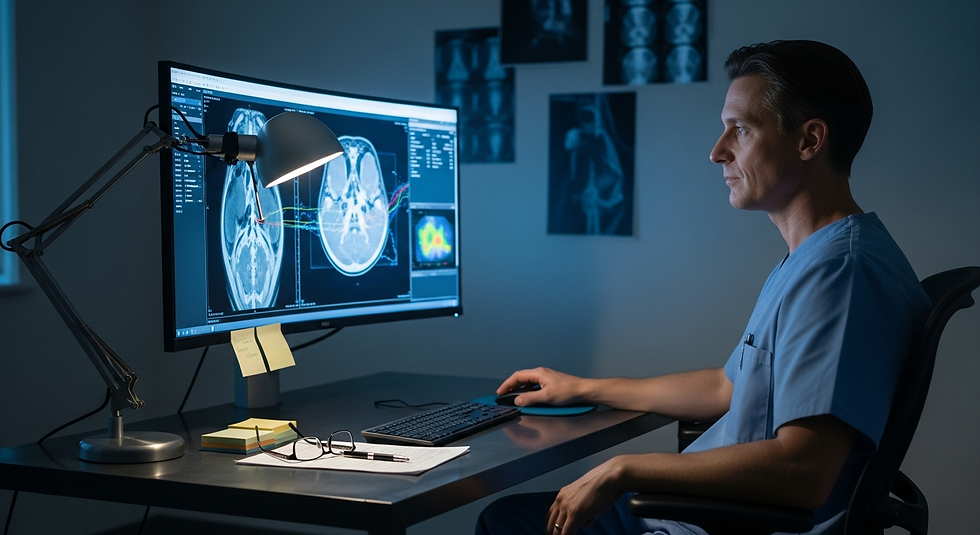
Improving diagnosis is one of the most valuable impacts of digital health technology. Early detection saves lives, reduces complications, and lowers treatment costs.
1. AI-Powered Diagnostic Tools
AI models analyze:
Medical images (X-rays, MRIs, CT scans)
Lab data
Pathology slides
Vitals and patient history
AI detects patterns that humans may miss, sometimes with higher precision.
2. Clinical Decision Support Systems (CDSS)
CDSS tools integrate with EHR systems to:
Flag risk conditions
Suggest differential diagnoses
Recommend treatment guidelines
Identify drug interactions
They make diagnoses faster and more consistently.
3. Predictive Analytics for Early Risk Detection
Using historical and real-time data, predictive algorithms forecast:
Stroke risks
Sepsis onset
Cardiac events
Hospital readmission probability
This enables proactive intervention.
4. Remote Diagnostic Tools
Patients can perform tests at home using connected devices:
ECG monitors
Blood pressure cuffs
Glucose sensors
Pulse oximeters
Clinicians receive instant alerts when metrics fall outside safe ranges.
Digital diagnosis reduces the load on hospitals and improves clinical accuracy.
Digital Health Technology in Medical Training
Digital health tools are completely reshaping medical education by making training more immersive, accessible, and repeatable.
1. XR Medical Simulation
Students train in virtual environments where they:
Practice emergency scenarios
Explore human anatomy
rehearse surgical workflows
Work with virtual patients
These experiences align with innovations covered in advanced XR in healthcare.
2. Virtual Reality (VR) Skill Development
VR offers safe practice for:
Surgical steps
Clinical diagnostics
IV placement
Intubation
Trauma procedures
Learners gain muscle memory without risk.
3. AI-Powered Training Assistants
AI instructors:
Guide learners step-by-step
Score performance
Provide corrective feedback
Adapt training difficulty to skill level
4. Digital Patient Simulations
Students interview virtual patients who speak, move, and react like real ones.
5. Remote & Distributed Training
Digital health allows:
Multi-user virtual classrooms
Remote anatomy labs
Group training inside shared XR environments
Digital tools make high-quality training accessible to all institutions.
Digital Health Technology in Patient Monitoring
Monitoring patients—especially those with chronic conditions—is one of the most important uses of digital health technology.
1. Wearables and IoT Devices
Devices track:
Heart rate
ECG
Blood pressure
Blood glucose
Activity
Sleep
Oxygen saturation
These tools alert patients and clinicians to dangerous shifts.
2. Remote Patient Monitoring (RPM)
RPM platforms continuously stream health data to clinicians.
3. AI Monitoring Models
AI detects early signs of deterioration by analyzing trends over time.
4. Smartphone-Based Monitoring
Cameras, microphones, and sensors can measure:
Breathing patterns
Skin tone changes
Mental health indicators
5. Virtual Nursing Assistants
Virtual assistants provide:
Medication reminders
Daily check-ins
Lifestyle guidance
Symptom tracking
These systems help patients stay on top of their care plans.
Use Cases: Digital Health Technology in Action
1. Chronic Disease Management
Patients use digital tools to track:
Diabetes
Hypertension
COPD
Heart disease
Mental health
Arthritis
Digital therapeutics, wearables, and remote monitoring reduce complications.
2. Emergency Medicine
AI tools quickly interpret scans and symptoms, improving triage speed.
3. Surgical Planning
Surgeons use XR and digital twins to rehearse procedures.
4. Hospital Operations
AI predicts:
Bed demand
ED flow patterns
Staffing needs
Readmission risk
5. Patient Engagement Tools
Apps guide patients through recovery plans and post-op instructions.
6. Medical Education
Students and clinicians train in immersive hybrid environments—many of which appear in the Mimic Health XR applications ecosystem (https://www.mimichealthxr.com/applications).
Benefits of Digital Health Technology
Earlier detection of diseases
More accurate diagnosis
Higher patient engagement
Lower hospital readmission rates
Safer clinical training environments
Better chronic-care outcomes
Reduced admin workload
Improved provider efficiency
Faster onboarding of medical staff
Scalable care delivery
Digital health technology improves every stage of the care journey.
Challenges of Digital Health Technology
Data privacy & security
Integration with legacy systems
Digital literacy differences
Clinician adoption barriers
Upfront implementation cost
Need for ongoing software updates
With proper planning, these challenges become manageable.
The Future of Digital Health Technology
Digital health is evolving with AI, XR, robotics, and predictive modeling.The next decade will bring:
AI copilots for clinicians
Holographic medical training
Fully immersive digital hospitals
Personalized treatment powered by digital twins
Emotion-aware patient interfaces
Autonomous diagnostic assistants
Continuous monitoring for every patient
Hybrid AR/VR clinical operations
Healthcare will become more intelligent, accessible, predictive, and personalized.

Conclusion
Digital health technology is redefining diagnosis, medical training, and patient monitoring. By integrating AI, XR, data analytics, and connected devices, healthcare organizations can deliver safer, faster, and more effective care. Patients benefit from continuous support, earlier interventions, and more personalized care paths—while clinicians gain the digital tools they need to reduce workload and improve accuracy.
Mimic Health XR plays a key role in this transformation by providing immersive simulations, clinical training tools, and innovative digital-health applications that strengthen clinical performance and patient outcomes.
FAQs
1. What is digital health technology?
It includes digital tools, software, and intelligent systems that improve healthcare delivery, diagnosis, training, and monitoring.
2. How does digital health improve diagnosis?
Through AI image analysis, predictive models, clinical decision support, and remote diagnostic tools.
3. What role does XR play in digital health?
XR supports training, simulation, surgical planning, and patient education.
4. Are digital health tools safe?
Yes—most are regulated, tested, and approved for medical use.
5. How does digital health help patients at home?
Through wearables, remote monitoring, telehealth, and digital therapeutics.
6. What conditions benefit from digital health technology?
Chronic diseases, emergencies, mental health issues, and rehabilitation needs.
7. What is the future of digital health?
AI-driven precision medicine, immersive training, digital twins, and intelligent remote monitoring.
8. Do hospitals save money using digital tools?
Yes—through reduced readmissions, fewer errors, automated workflows, and efficient training.


Comments