.png)
.png)
What Is a Medical Avatar? Uses, Benefits and Risks

What is a medical avatar, and where can it genuinely improve care?
A medical avatar is a digital human or virtual patient designed for healthcare communication, education, training, or support. Unlike a static character, an advanced avatar can combine a lifelike appearance with conversational AI, clinical content, multilingual speech, gestures, and connections to approved workflows.
For hospitals, medical educators, pharmaceutical teams, and digital-health providers, the real question is not whether an avatar looks impressive. It is whether the system is safe, useful, accessible, measurable, and appropriate for the task. This guide explains the technology, its strongest use cases, its limitations, and the questions decision-makers should ask before deployment.
Table of Contents
What Is a Medical Avatar?

A medical avatar is a computer-generated person used in a health-related experience. It may act as a virtual health assistant, a simulated patient, an educator, a coach, or a visible interface for an automated service. The term describes the role and presentation layer, not one single technology.
Some medical avatars are pre-scripted. Others use AI-powered avatar technology to understand spoken or typed questions and deliver approved answers in real time. A sophisticated system can coordinate voice, facial animation, body language, language selection, and contextual information so the interaction feels coherent rather than robotic.
A medical avatar should not automatically be treated as a clinician. Its authority depends on its intended use, evidence base, content governance, and regulatory status. An avatar that explains appointment preparation has a different risk profile from one that interprets symptoms or recommends a course of action.
It is useful to distinguish a medical avatar from a basic chatbot. A chatbot is usually text-first. A medical avatar adds visual presence, spoken interaction, nonverbal cues, and sometimes a spatial or immersive environment. Those qualities can make information easier to follow, but they also raise expectations around accuracy, privacy, representation, and transparency.
The best implementations state clearly that the user is interacting with a digital system. They define what the avatar can and cannot do, provide a route to a human professional, and design the experience around a specific clinical or operational objective.
How Do Medical Avatars Work?

A medical avatar is usually built as a stack of coordinated components. The visible digital human is only one layer. Behind it sit speech recognition, language processing, knowledge sources, workflow rules, analytics, security controls, and escalation pathways.
The interaction often begins when a user speaks, types, or selects an option. Speech is converted into text, the system identifies the request, and an approved response is generated or retrieved. The avatar then delivers that response using synchronized voice and animation. Mimic Health XR combines these capabilities with immersive healthcare technology including real-time 3D, motion capture, and extended reality.
In lower-risk experiences, the knowledge base may contain fixed education content, frequently asked questions, navigation instructions, or training scenarios. In higher-risk settings, content needs stronger clinical review, strict version control, audit trails, and carefully limited outputs. Retrieval from a curated source is often safer than allowing an unrestricted model to answer any question.
Integrations determine whether the avatar can do more than talk. With the right permissions, it might guide registration, explain a care pathway, send a reminder, collect structured information, launch a training module, or hand the user to a staff member. Every integration should follow data-minimization principles and preserve the boundaries of the intended workflow.
Multimodal systems can respond to touch, gaze, gestures, or environmental events. In XR, a learner may examine a virtual patient, ask questions, make a decision, and see the scenario change. This is why medical avatars often overlap with virtual patients and simulation, even though the concepts are not identical.
Where Are Medical Avatars Used?
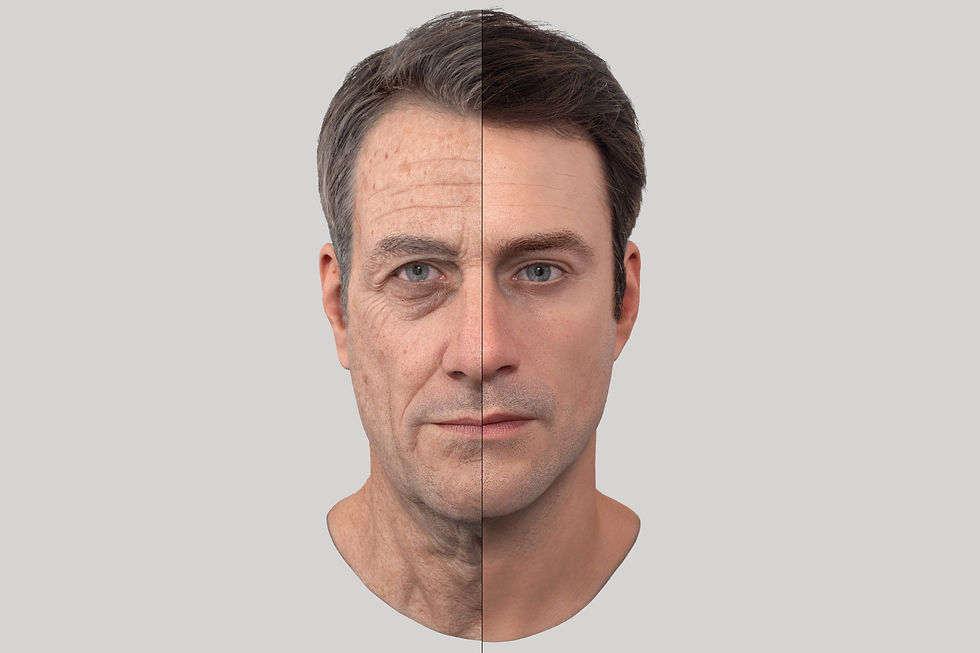
Patient education is one of the clearest applications. An avatar can explain preparation, recovery, medication routines, or self-management in short, repeatable steps. It can support different languages and reading levels, complementing a broader patient education and engagement strategy.
Virtual assistants can help patients navigate services, prepare for appointments, and understand what happens next. In telehealth and remote consultation, an avatar may provide orientation before a clinician joins, gather non-diagnostic information, or reinforce instructions afterward.
Medical education uses virtual patients to create repeatable conversations and realistic decision points. Learners can practise history-taking, communication, consent, empathy, and de-escalation without exposing a real patient to novice errors. When combined with 3D medical simulations, the same environment can support procedural and team-based learning.
Hospitals can use avatars for onboarding, safety procedures, and scenario-based practice. A consistent digital facilitator can present protocols and assess choices while educators focus on coaching. This approach fits hospital training and safety protocols and can be repeated across shifts and locations.
Rehabilitation programs may use an avatar as a coach that demonstrates exercises, prompts adherence, or celebrates progress. The avatar should remain connected to a clinician-approved plan, particularly when pain, mobility, cognition, or mental health is involved. Explore rehabilitation and physical therapy applications.
Pharmaceutical and medical-device teams may use medical avatars to explain mechanisms, demonstrate correct use, or support an interactive product experience. These applications still need balanced claims, medical-legal review, accessibility, and clear separation between education and promotion.
What Benefits Can Medical Avatars Deliver?

The most valuable benefit is consistency. A reviewed explanation can be delivered the same way every time while still allowing users to choose a language, pace, or level of detail. This helps organizations scale common information without asking clinicians to repeat every routine explanation.
A visible, conversational interface can increase attention. People often find it easier to follow a spoken explanation supported by facial expression and gesture than a dense page of text. The effect is especially useful when content is divided into brief steps and supported by captions, controls, and a way to repeat information.
Medical avatars can improve access beyond normal operating hours. They may guide users through non-urgent education, navigation, and preparation whenever needed. That availability must be framed carefully: twenty-four-hour access to information is not the same as twenty-four-hour access to clinical judgment.
For training, avatars enable safe repetition. Learners can practise difficult conversations and make decisions in standardized scenarios. Educators can compare performance against defined objectives and vary a case without needing actors or patients for every session.
They can create useful operational signals. Anonymous or appropriately consented analytics may reveal where users abandon a journey, which questions cause confusion, and which languages are requested. Those insights help teams improve content and service design, provided measurement is proportionate and privacy-preserving.
Avatars can make services feel more approachable when designed with empathy and cultural awareness. The benefit does not come from realism alone. It comes from appropriate language, respectful behavior, inclusive representation, and a reliable route to human help.
What Should Healthcare Leaders Evaluate?

Start with the use case, not the character design. Define the user, task, setting, desired outcome, and unacceptable failure. A narrow objective such as improving preparation for an imaging appointment is easier to test and govern than an open-ended promise to answer every health question.
Review clinical boundaries. Decide which topics are permitted, which require a fixed response, and which must trigger escalation. Identify who owns the content, how often it is reviewed, how updates are approved, and how the system communicates uncertainty.
Examine privacy and security early. Map every data field, integration, storage location, retention period, and user permission. Avoid collecting information merely because the system can. Deployments should align with applicable privacy, security, medical-device, employment, and accessibility obligations in each market.
Test accessibility across the complete experience. Captions, keyboard access, screen-reader compatibility, contrast, pace controls, language quality, and alternatives to speech are essential. A realistic avatar that excludes users with hearing, vision, motor, speech, cognitive, or connectivity constraints is not a successful interface.
Evaluate representation and trust. Users should know they are interacting with AI or automation. The avatar’s appearance and behavior should avoid stereotypes and should be tested with the people it is intended to serve. Human-likeness can support engagement, but it must never disguise limitations or manufacture clinical authority.
Run a measured pilot before scaling. Track comprehension, task completion, safety events, escalation quality, satisfaction, accessibility, and staff workload. Teams considering a custom experience can review Mimic Health XR’s healthcare applications and discuss a tightly scoped proof of concept.
A responsible procurement decision also considers maintainability. Ask how content, models, voices, languages, integrations, and security patches will be updated. Confirm who monitors performance after launch and what happens if an upstream service changes or becomes unavailable.
Frequently Asked Questions
What is a medical avatar?
A medical avatar is a digital human or virtual patient used for healthcare communication, education, training, navigation, coaching, or support.
Is a medical avatar the same as a healthcare chatbot?
Not exactly. A chatbot is usually text-first, while a medical avatar adds a visual character, voice, facial animation, gesture, and sometimes an immersive 3D environment.
Can a medical avatar diagnose a patient?
Only if the specific system is designed, validated, governed, and legally authorized for that purpose. Most avatars should provide limited support or education and refer clinical decisions to qualified professionals.
How are medical avatars used in hospitals?
Hospitals can use them for patient orientation, education, staff onboarding, safety training, simulated conversations, service navigation, and selected administrative workflows.
Can medical avatars support multiple languages?
Yes. Speech recognition, translated content, and multilingual voice systems can support multiple languages, but medical accuracy and cultural appropriateness must be reviewed for every language.
Are medical avatars suitable for medical training?
Yes. They can act as repeatable virtual patients for communication, history-taking, decision-making, de-escalation, and team training without placing real patients at risk.
What privacy risks should healthcare organizations consider?
Teams should evaluate what data is collected, why it is needed, where it is processed, who can access it, how long it is retained, and whether users can choose an alternative channel.
How should a healthcare organization measure success?
Useful measures include comprehension, task completion, escalation accuracy, satisfaction, accessibility, safety events, training performance, and changes in staff workload.
Do medical avatars replace doctors or nurses?
They are best used to support defined tasks, not replace professional judgment, empathy, accountability, or complex clinical decision-making.
What makes a medical avatar trustworthy?
Clear disclosure, accurate reviewed content, narrow boundaries, strong privacy controls, inclusive design, visible uncertainty, human escalation, and ongoing monitoring all contribute to trust.
Conclusion
A medical avatar is most useful when it turns a carefully defined healthcare task into a clear, accessible, and measurable conversation. Its value depends less on novelty than on the quality of its content, governance, integration, accessibility, and human escalation.
Planning a medical avatar or virtual-patient pilot? Contact Mimic Health XR to explore a responsible, use-case-led experience for patient engagement, healthcare training, or immersive clinical communication.


Comments