.png)
.png)
De-Escalation Techniques in Healthcare: VR Training Guide
- David Bennett
- Jul 31
- 9 min read

Can healthcare teams practice tense patient encounters safely before a real crisis occurs?
De-escalation techniques in healthcare help clinicians reduce tension, protect dignity, and make safer decisions when a patient or visitor becomes distressed. Yet these skills are difficult to build through lectures alone because tone, distance, timing, and emotional pressure matter as much as the words a clinician chooses.
Virtual reality adds the missing practice layer. It places learners inside repeatable clinical conversations where they can recognize escalation cues, test responses, receive feedback, and try again without exposing a patient, colleague, or visitor to risk. This guide explains what effective immersive de-escalation training should include and how hospitals, educators, and healthcare organizations can implement it responsibly.
Table of Contents
What Are De-Escalation Techniques in Healthcare?

De-escalation is a structured effort to lower emotional intensity before a situation becomes unsafe. In healthcare, it can involve an anxious patient waiting for results, a family member frustrated by delays, a person experiencing psychosis, a confused older adult, or someone whose pain has not been controlled. The goal is not to win an argument. It is to create enough safety and trust for communication, assessment, and care to continue.
Effective practice combines verbal and nonverbal behavior. Clinicians use a calm voice, simple language, respectful boundaries, active listening, and choices that restore a sense of control. They also watch posture, eye contact, movement, personal space, environmental triggers, and changes in speech. These details are especially important in the broader context of patient-centered immersive care, where technology must support human judgment rather than replace it.
Healthcare teams can connect these interpersonal skills with medical simulation in XR. A simulation can present the same clinical objective with different patient personalities, cultural contexts, noise levels, time pressures, and escalation paths. That variability helps learners understand principles instead of memorizing a script.
Recognize early signs such as pacing, clenched hands, repeated demands, withdrawal, or a sudden change in tone.
Introduce yourself, acknowledge emotion, and clarify the immediate concern.
Offer realistic choices while maintaining clinical and safety boundaries.
Know when to pause, call for assistance, or transition to an emergency response protocol.
Why Traditional De-Escalation Training Falls Short
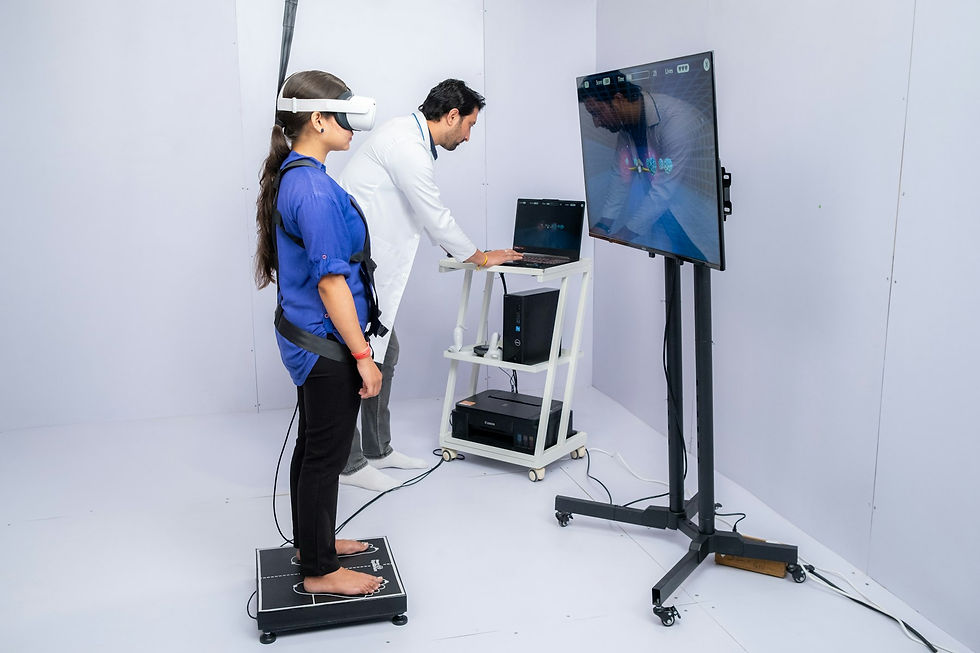
Classroom teaching is useful for shared language, policy, and foundational models, but knowing a checklist is not the same as using it under pressure. During a tense interaction, clinicians must divide attention between the patient’s words, body language, the physical environment, clinical priorities, and the safety of everyone nearby. A slide deck cannot reproduce that cognitive and emotional load.
Live role-play can be more realistic, yet it is resource-intensive and inconsistent. Actor availability, facilitator style, learner confidence, room access, and scheduling all affect the experience. Some participants may receive a challenging scenario while others receive an easier one, making competency comparisons unreliable. Learners may also hesitate to make mistakes in front of colleagues, which reduces experimentation and honest reflection.
Immersive practice complements, rather than eliminates, instructors and standardized patients. Like other forms of VR healthcare simulation, it allows the repeatable parts of training to be standardized while educators focus on coaching, discussion, transfer to real workflows, and ethical judgment. The strongest programs blend digital rehearsal, facilitated debriefing, and supervised practice.
A further limitation of one-time training is skill decay. De-escalation depends on habits that must remain available during stressful shifts. Short, recurring simulations can refresh recognition, communication, and decision-making more realistically than an annual compliance session. They can also introduce new scenarios as local risks, policies, and patient populations change.
How VR De-Escalation Training Works

A VR scenario places the learner in a hospital room, emergency department, reception area, behavioral health setting, ambulance bay, or home-care environment. A virtual patient or family member responds to the learner’s choices, voice, gaze, proximity, and timing. The interaction can branch toward cooperation, continued distress, or a safety escalation based on the learner’s behavior.
The simulation should begin with a clear role and objective, not a surprise test. Learners need to know the limits of the exercise, how to stop, what data is recorded, and what support is available. Once inside, they gather context, attempt communication, and make decisions. The system can capture observable actions, while an instructor evaluates nuance that an automated score may miss.
This approach builds on the interactive logic used in AI avatars in healthcare. Responsive virtual characters can vary language, emotional intensity, symptoms, and conversational style. Carefully governed AI may add flexibility, but clinical content, escalation boundaries, and feedback criteria should remain under expert control.
Briefing establishes objectives, psychological safety, controls, and stop conditions.
The scenario presents clinical, environmental, and interpersonal cues.
Branching responses change according to learner actions and communication.
A structured debrief connects choices with evidence, policy, and alternative approaches.
Replay gives the learner an immediate opportunity to apply feedback.
Clinical Scenarios That Benefit From Immersive Practice

The best scenarios are not simply dramatic. They represent frequent, consequential interactions that staff find difficult to rehearse. Emergency departments may prioritize agitation, intoxication, long waits, and worried relatives. Behavioral health teams may focus on paranoia, trauma triggers, boundary setting, or self-harm concerns. General wards may practice delirium, dementia-related distress, pain, communication barriers, or treatment refusal.
Team-based cases can connect de-escalation with emergency response training in XR. Learners decide who speaks, who reduces environmental stimulation, who protects an exit route, who alerts colleagues, and when the situation exceeds the limits of verbal intervention. This reinforces coordinated action without treating every distressed person as a security threat.
Scenarios should reflect local reality. A rural clinic, pediatric hospital, rehabilitation center, ambulance service, and large urban emergency department face different constraints. Content discovery should include incident reviews, staff interviews, patient feedback, safety reports, and educator priorities. Personal data must be removed, and simulations should avoid recreating a recognizable traumatic event.
A useful scenario library grows deliberately. Start with a small number of high-value cases, validate them with subject-matter experts and frontline staff, then add controlled variations. Changing one factor at a time—noise, staffing, language, acuity, family presence, or time pressure—helps educators identify what learners can transfer and where additional support is needed.
Core Skills Healthcare Workers Can Rehearse

Immersive de-escalation training should assess a connected set of behaviors, not reward a single phrase. Early recognition comes first: the learner notices changes in affect, speech, movement, attention, and the environment. They then regulate their own pace and posture before attempting to influence someone else. Self-management is a clinical safety skill because visible anxiety or defensiveness can intensify an encounter.
Communication practice includes introducing oneself, validating emotion without agreeing to inaccurate claims, asking one clear question at a time, checking understanding, and offering realistic choices. Learners can rehearse limit-setting that remains respectful and specific. For example, a boundary should describe the behavior that must stop, the reason, and the next safe option rather than threaten or shame the person.
Teams also need situational awareness and role clarity. Lessons from VR medical training apply here: performance improves when learners repeatedly coordinate attention, communication, and action. A strong scenario lets staff practice calling for help early, handing over the lead communicator, protecting bystanders, and using the least restrictive response consistent with immediate safety.
Emotional self-regulation and a non-threatening stance.
Active listening, empathy, clarification, and concise language.
Trauma-informed choices that restore agency where possible.
Respectful boundaries and clear behavioral expectations.
Team communication, escalation thresholds, and safe disengagement.
Post-event documentation, handover, reflection, and staff support.
Measuring Competency Without Risking Patients
Measurement should make training more useful, not reduce a complex human interaction to a game score. Observable indicators can include response time, distance, interruptions, choice of language, recognition of risk cues, calls for assistance, and completion of safety steps. These measures provide structure, but they need interpretation because an efficient response is not always an empathetic or clinically appropriate one.
Dashboards can support a wider predictive analytics and healthcare XR strategy by revealing patterns across repeated sessions. Educators might discover that teams recognize verbal cues but miss environmental hazards, or that new staff delay calling for support. Aggregated patterns can guide curriculum changes without using simulation data as a punitive employee surveillance system.
Define competency before choosing technology. A rubric should distinguish critical safety actions, effective behaviors, context-dependent choices, and coaching opportunities. Multiple assessors should interpret the rubric consistently. Learners should understand what is measured and how results will be used. Where automated speech or behavior analysis is included, the organization should test accuracy across accents, languages, communication styles, disability, and cultural differences.
Evaluation should extend beyond the headset. Useful outcomes include learner confidence calibrated against observed performance, retention after several weeks, transfer during live simulation, staff perceptions of safety, and quality of real incident debriefs. Claims about reducing workplace violence or patient harm require careful longitudinal evidence and should not be inferred from completion rates alone.
Designing Trauma-Informed and Inclusive Simulations
Healthcare de-escalation training deals with distress, coercion, discrimination, and sometimes violence. It therefore needs a trauma-informed design process. Learners should receive content warnings, clear stop controls, and alternatives when a scenario may be unsuitable. Debriefing must avoid glorifying confrontation or treating emotional activation as failure. The purpose is to build capability while protecting psychological safety.
Patient characters should not reinforce stereotypes. Aggression must not be casually linked to a diagnosis, race, age, disability, gender identity, or socioeconomic group. Scenarios should show multiple causes of distress, including pain, fear, sensory overload, communication barriers, previous trauma, confusing processes, and unmet needs. Patient and caregiver advisors can identify language or story choices that clinicians may overlook.
Inclusive design aligns with the broader potential of virtual and mixed reality in healthcare. Accessibility options may include seated modes, captions, adjustable audio, alternative controls, language variants, and facilitator-led desktop viewing. Headset comfort, cybersickness, vision, hearing, mobility, and neurodiversity should be considered before participation.
Ethical governance also covers privacy and fairness. Collect only the data needed for learning, establish retention periods, restrict access, and separate formative coaching from high-stakes employment decisions unless validity has been demonstrated. Staff representatives, educators, clinicians, safety leaders, data protection specialists, and patient voices should all contribute to governance.
How to Implement a VR De-Escalation Program
Begin with a measurable problem and a defined learner group. A hospital might focus on emergency department nurses responding to escalating frustration during long waits, while a mental health service might prioritize trauma-informed limit-setting. Review incident data and workflows, but do not assume technology is the answer to staffing shortages, poor communication systems, environmental design problems, or inadequate security procedures.
Create a multidisciplinary design team and map the target behavior. Specify what the learner should notice, say, do, document, and escalate. Then build a minimum viable scenario with a small number of meaningful branches. Clinical experts validate safety and realism; learning specialists shape objectives and debriefing; frontline staff test authenticity; patient advisors examine dignity and representation.
A pilot can be integrated with existing XR technologies in modern healthcare initiatives rather than launched as an isolated novelty. Test the full operational pathway: headset cleaning, room setup, facilitator training, accessibility, technical support, scheduling, data handling, and follow-up practice. Compare outcomes with an appropriate baseline and document both benefits and friction.
Define the safety or learning problem and the population in scope.
Select two or three high-value scenarios grounded in local workflows.
Agree on clinical content, behavioral rubrics, privacy, and accessibility.
Pilot with a small representative cohort and trained facilitators.
Review performance, learner experience, technical reliability, and transfer.
Iterate the scenario and scale only when evidence supports expansion.
Organizations exploring a custom program can review Mimic Health XR’s healthcare XR applications and services and use an early discovery phase to align simulation design with clinical, technical, and governance requirements.
Frequently Asked Questions
What are de-escalation techniques in healthcare?
They are verbal, nonverbal, environmental, and team-based actions used to reduce distress and create enough safety for assessment and care to continue.
Can VR replace instructor-led de-escalation training?
No. VR is most effective as repeatable practice within a blended program that includes instruction, facilitated debriefing, policy review, and supervised transfer to real workflows.
Which healthcare workers benefit from immersive de-escalation practice?
Nurses, physicians, allied health professionals, reception teams, behavioral health staff, paramedics, security personnel, students, and managers can all benefit from role-specific scenarios.
Is VR de-escalation training suitable for mental health settings?
Yes, when scenarios are co-designed with mental health experts and people with lived experience, avoid stereotypes, and follow trauma-informed, least-restrictive principles.
What should a VR de-escalation scenario measure?
Useful measures include cue recognition, communication choices, timing, boundary setting, calls for help, environmental awareness, and safe disengagement, interpreted through a validated rubric.
How often should healthcare teams repeat de-escalation training?
Frequency should reflect local risk and evidence of skill retention. Short refreshers and spaced practice are generally more useful than relying only on a single annual session.
How can hospitals protect learner privacy?
They should minimize collected data, explain its purpose, restrict access, set retention limits, and avoid punitive use of formative training data without validated governance.
What makes a simulation trauma-informed?
It provides choice, transparency, stop controls, respectful representation, psychologically safe debriefing, and scenarios that recognize multiple causes of distress without stereotyping.
How long does implementation take?
Timing depends on scenario complexity, hardware, integration, review, and testing. A focused pilot with one learner group and a few validated scenarios is the safest starting point.
How do organizations choose a healthcare XR partner?
Look for clinical co-design, realistic interaction, secure data practices, accessibility, measurable learning objectives, reliable deployment support, and evidence-focused evaluation.
Conclusion
De-escalation is a human skill strengthened by deliberate, realistic, and reflective practice. VR can give healthcare workers a safe place to recognize cues, manage their own response, communicate under pressure, coordinate with colleagues, and learn from mistakes. Its value depends on thoughtful scenario design, expert facilitation, inclusive governance, and evidence that practice transfers beyond the headset.
Ready to explore a custom immersive training program? Contact Mimic Health XR to discuss clinical scenarios, interactive patient behavior, implementation requirements, and a pilot aligned with your organization’s safety and learning goals.


Comments