.png)
.png)
Virtual Reality Medical Training for Healthcare De-Escalation
- David Bennett
- 6 days ago
- 8 min read
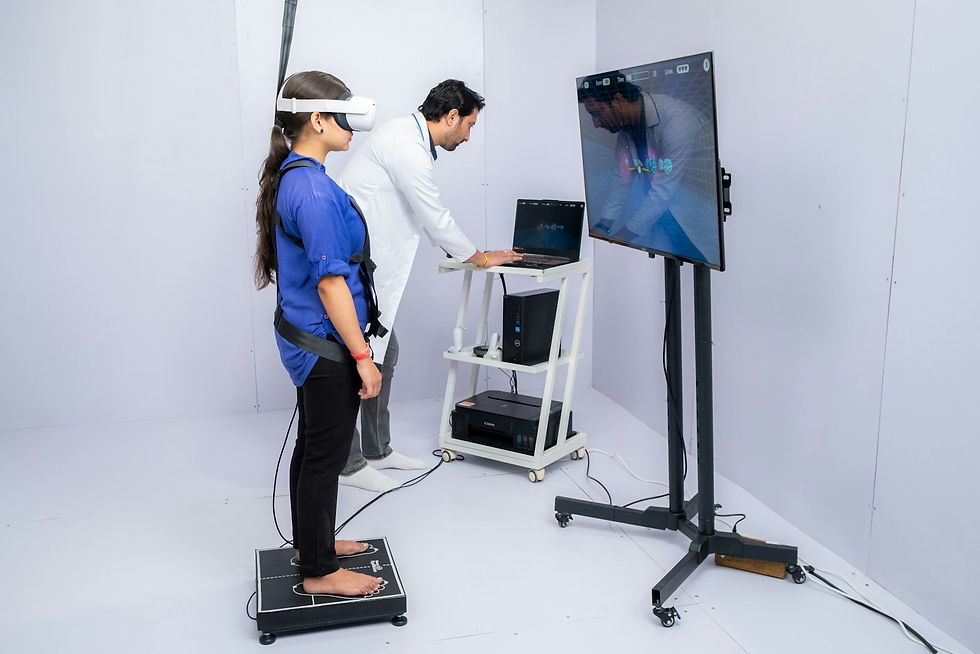
Could immersive practice help healthcare teams respond more calmly, consistently and safely when a patient interaction begins to escalate?
Healthcare workers regularly face conversations shaped by pain, fear, confusion, long waits and uncertainty. Traditional presentations can explain de-escalation principles, but they cannot fully reproduce the pressure of choosing words, reading body language and coordinating with colleagues in real time. Virtual reality medical training closes that gap by turning knowledge into guided practice.
For organisations exploring immersive learning, Mimic Health XR combines lifelike digital humans, interactive environments and healthcare-focused XR development. The result can be a repeatable training experience designed around real workflows, local policies and measurable learning goals.
Table of Contents
Why De-Escalation Belongs in Virtual Reality Medical Training
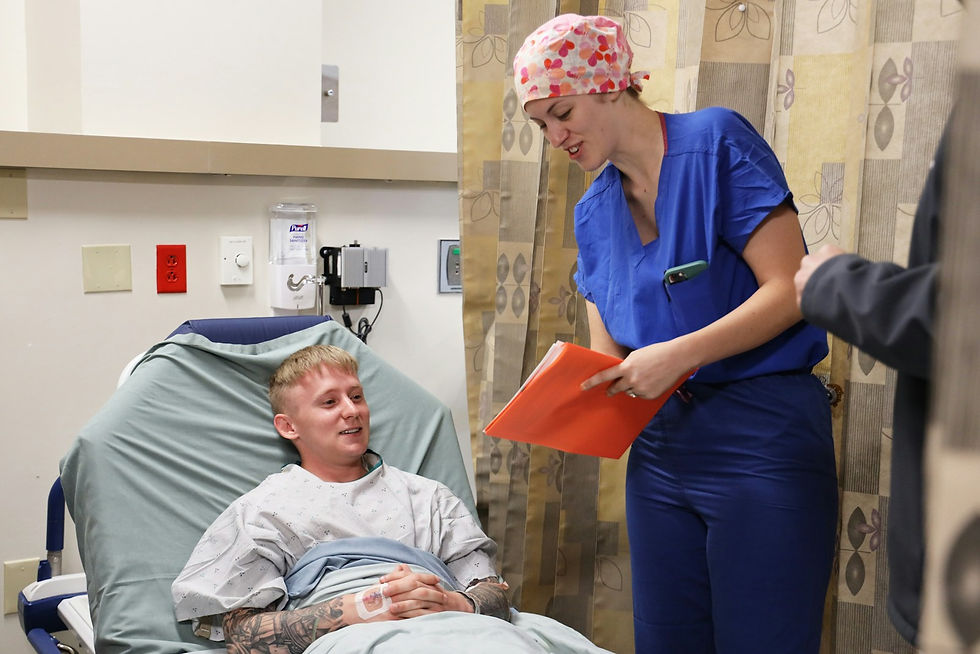
De-escalation is not a single script. It is a sequence of observations and choices: noticing a change in tone, recognising distress, controlling one’s own pace, using respectful language, offering realistic options and knowing when to involve others. Those skills are difficult to build through passive content alone because performance changes when a learner feels time pressure or emotional intensity.
Immersive simulation introduces that pressure without creating a real-world crisis. A virtual patient can become more anxious, withdrawn or confrontational depending on the learner’s approach. The environment can include distractions, other staff, equipment and spatial constraints. Learners can pause, repeat and compare different responses, making hidden habits visible.
This approach fits naturally with immersive 3D healthcare simulations, which are built to recreate procedures and patient-care workflows safely. It also complements AI avatar services for healthcare, where responsive digital humans support realistic dialogue and emotion-aware interaction.
Recent research strengthens the case for this format. A 2026 study involving 221 nursing and midwifery students reported a significant increase in confidence after one 20-minute VR aggression and violence de-escalation session. Most participants considered VR suitable for de-escalation learning and wanted further training. Early work in paediatric settings has likewise explored trauma-informed VR as a psychologically safe and engaging method for interprofessional teams.
The practical benefit is not that VR makes difficult encounters simple. It allows staff to encounter complexity repeatedly, learn from mistakes privately and return to practice with a clearer plan. That combination can support confidence, consistency and a shared language across roles.
How Immersive De-Escalation Simulation Works

A strong simulation begins with a credible situation rather than impressive technology. The scenario might involve an anxious relative in an emergency department, a confused older patient resisting care, a distressed young person, or a patient frustrated by an unexpected delay. The setting, dialogue and escalation pattern should reflect the organisation’s actual challenges.
At the start, the learner receives a concise briefing: their role, immediate objective, available resources and relevant safety boundaries. Once the experience begins, a virtual character responds to spoken language, timing, proximity or selected actions. Branching logic changes the scene according to the learner’s decisions. Helpful choices may reduce tension; dismissive or rushed choices may increase it.
The experience can draw on virtual, augmented and mixed reality technology as well as conversational AI. A digital human may display facial expression, gaze, posture and vocal changes that give the learner clinically meaningful cues. The scenario does not need endless possibilities; it needs carefully authored decision points that connect directly to the learning objectives.
Feedback is the second half of the experience. An immediate debrief can replay key moments, show the path taken and invite reflection. A facilitator may ask what the learner noticed, what they intended, how the patient responded and what they would change. This is where an engaging simulation becomes purposeful learning.
A repeat attempt then turns reflection into behaviour. The learner can try a different opening statement, slow the interaction, acknowledge emotion earlier or request support sooner. Because the scenario is standardised, educators can compare attempts while still coaching the individual rather than reducing the session to a pass-or-fail test.
Skills Healthcare Teams Can Practise Safely
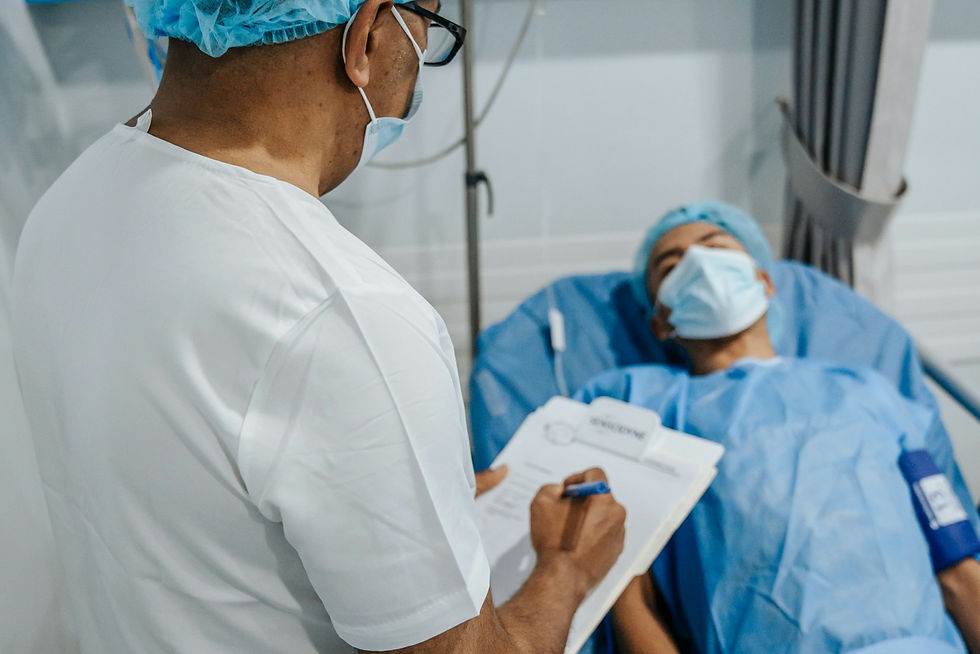
Virtual reality medical training is especially valuable for skills that combine perception, communication and judgement. De-escalation depends on all three. Learners need to notice what is happening, select an appropriate response and deliver it in a way that feels respectful and credible.
Situational awareness: identifying changes in voice, movement, facial expression, personal space and environmental risk.
Self-regulation: controlling posture, pace and tone so the clinician does not unintentionally intensify the interaction.
Active listening: reflecting concerns, checking understanding and distinguishing the person’s immediate need from the surface complaint.
Clear choices: offering realistic options without making promises the team cannot keep.
Boundary setting: communicating limits firmly, respectfully and consistently.
Team coordination: calling for assistance, sharing observations and handing over without creating confusion.
Trauma-informed practice: protecting dignity, reducing avoidable triggers and preserving the person’s sense of agency.
Post-incident reflection: recognising what worked, what changed the trajectory and where organisational factors contributed.
Different roles can practise the same event from different perspectives. A receptionist may focus on early recognition and calling support. A nurse may manage communication and clinical needs. A security colleague may consider positioning and least-restrictive intervention. A team scenario can then test whether those roles coordinate effectively.
Mimic Health XR’s broader healthcare applications show how immersive tools can support medical education, rehabilitation and patient engagement. For de-escalation, the same human-centred design principle matters: technology should support the relationship and the learning goal, not distract from them.
Scenarios should also represent diversity. Age, disability, language, culture, sensory needs and previous experiences can affect how a person interprets a healthcare encounter. Inclusive scenario design helps teams practise flexible communication rather than memorising one supposedly universal response.
How to Design an Effective VR Training Programme

A successful programme starts with a specific performance problem. “Improve communication” is too broad. A stronger objective might be: staff will recognise three early signs of escalation, acknowledge the person’s concern, offer two appropriate options and request support according to local policy. Clear objectives guide every design decision.
Next, collect evidence from the workplace. Review incident themes, staff feedback, patient experience data and existing training. Interview frontline employees about where conversations become difficult and which organisational constraints matter. Co-design protects against scenarios that look plausible to developers but feel artificial to clinicians.
The development team should connect the programme to the organisation’s custom XR and AI capabilities and its established clinical education. It can also use emotion-aware AI avatars when dialogue and nonverbal response are central to the learning experience.
Define the target learners, setting and operational risk.
Write observable learning outcomes and map each to a decision point.
Develop dialogue with clinical, education, safety and lived-experience input.
Build a short prototype before producing multiple scenarios.
Test usability, psychological safety, accessibility and clinical credibility.
Train facilitators to conduct consistent, reflective debriefs.
Pilot with a small cohort, revise, and only then expand.
Psychological safety requires particular attention. Learners should know that the simulation is a learning space, how performance data will be used and when they may pause. Content warnings and opt-out arrangements may be appropriate for scenarios involving aggression or trauma. A facilitator should be prepared to support participants who find the material personally difficult.
Hardware decisions come after the learning design. Standalone headsets can simplify deployment, while higher-end systems may support advanced tracking or visual fidelity. The right choice depends on scale, hygiene requirements, available space, IT governance, accessibility and the interaction model—not on novelty.
Measuring Outcomes and Scaling Across an Organisation

Completion rates alone cannot show whether a de-escalation programme works. Measurement should connect the experience to the intended behaviour. Before training, organisations can capture baseline confidence, knowledge or observed performance. During the simulation, they can record decisions, response timing and use of key behaviours. Afterward, they can assess reflection, repeat performance and transfer to practice.
Useful indicators include earlier recognition of risk, more appropriate language, better adherence to local escalation procedures, improved teamwork and stronger learner confidence. Longer-term evaluation may consider incident patterns, use of restrictive interventions, staff injury, patient complaints or perceptions of safety. Those outcomes are influenced by many factors, so they should be interpreted carefully rather than attributed to VR alone.
Qualitative feedback remains essential. Learners can reveal whether the scenario felt credible, which cues they missed and where the technology interfered. Facilitators can identify recurring misconceptions. Patients and lived-experience contributors can assess whether dialogue and behaviour feel respectful. Together, these perspectives improve the next version.
Scaling becomes easier when the organisation treats scenarios as a reusable learning system. The team can build on a common environment, avatar framework, data model and facilitation guide while changing roles or decision points. Explore the Mimic Health XR approach and team or review its healthcare XR insights to connect immersive design with wider digital-health strategy.
A staged rollout is usually more sustainable than an enterprise-wide launch. Begin with one setting and one measurable challenge. Establish ownership for content, devices, data, facilitator training and updates. Once the pilot demonstrates usability and learning value, adapt the model for adjacent teams.
Virtual reality medical training should ultimately strengthen a broader safety culture. It works best when staff have supportive leadership, clear procedures, adequate staffing and permission to raise concerns. Simulation can expose system problems; organisations need a process for acting on what learners discover.
Frequently Asked Questions
What is virtual reality medical training?
Virtual reality medical training places learners inside interactive, computer-generated clinical scenarios. They can assess situations, communicate with virtual patients, make decisions and receive feedback without exposing a real patient or colleague to risk.
How can VR help with healthcare de-escalation?
VR can recreate emotionally charged encounters in a controlled setting. Learners practise observing early warning signs, regulating their own response, choosing language, maintaining space and escalating to team support when appropriate.
Does VR replace instructor-led de-escalation training?
No. It works best as part of a blended programme that includes policy, discussion, coached reflection and supervised practice. VR adds repeatable experiential learning; qualified educators and organisational procedures remain essential.
Which healthcare teams can use de-escalation simulations?
Emergency, mental health, paediatric, geriatric, reception, security, community care and multidisciplinary teams can all benefit. Scenarios should be tailored to the roles, risks, environments and escalation pathways of each service.
Can a VR scenario adapt to a learner’s choices?
Yes. Branching logic and responsive digital humans can change tone, behaviour and scenario direction according to what the learner says or does. This creates meaningful consequences while preserving a safe learning environment.
What should a de-escalation simulation measure?
Useful measures include recognition of warning signs, response timing, communication choices, use of personal space, adherence to protocol, requests for support, learner confidence and quality of reflection during debriefing.
How long should a VR de-escalation session take?
A focused scenario can often be completed in 10 to 20 minutes, followed by a structured debrief. The right duration depends on learning goals, headset comfort, scenario complexity and the time available in clinical schedules.
How do hospitals begin a VR training pilot?
Start with one high-priority use case, a defined learner group and measurable objectives. Co-design the scenario with frontline staff, educators, safety leads and subject-matter experts, then run a small pilot before wider deployment.
Can VR medical training support multilingual teams?
Yes. Scenarios can include multiple languages, communication styles and cultural contexts. Multilingual digital humans can also support inclusive practice, provided clinical and linguistic content is reviewed by qualified experts.
Conclusion
Virtual reality medical training gives healthcare teams something traditional instruction cannot offer on its own: repeatable, emotionally realistic practice with room to pause, reflect and try again. For de-escalation, that matters because the quality of a response depends not only on knowing a principle, but on recognising the moment and applying it under pressure.
The strongest programmes begin with real clinical needs, involve frontline and lived-experience expertise, protect psychological safety and measure behaviour rather than novelty. When those foundations are in place, immersive simulation can become a practical tool for safer communication, stronger teamwork and more consistent patient-centred care.
Ready to explore a tailored de-escalation or clinical communication simulation? Contact Mimic Health XR to discuss a custom VR medical training programme.

Comments