.png)
.png)
What Is Virtual Reality in Healthcare? Uses & Benefits
- David Bennett
- Aug 11
- 8 min read

What is virtual reality in healthcare, and where does it create measurable value for patients, clinicians, and medical educators?
Virtual reality in healthcare uses immersive, computer-generated environments to support clinical training, patient education, treatment, rehabilitation, planning, and communication. Instead of only reading about a procedure or watching a video, a user can enter a three-dimensional scenario, interact with virtual people or equipment, make decisions, and receive feedback.
The strongest healthcare XR projects start with a defined problem rather than a headset. Mimic Health XR combines healthcare XR applications, interactive environments, virtual patients, and measurable learning design. This guide answers the questions decision-makers commonly ask before they invest: what VR can do, which use cases fit, what benefits are realistic, what it costs, and how to manage risk.
Table of Contents
What is virtual reality in healthcare?

Virtual reality in healthcare is the use of immersive digital environments for a health-related objective. A headset usually provides stereoscopic vision and head tracking, while controllers, hand tracking, voice, eye tracking, or physical props can let the user interact. Some experiences are fully immersive; others run on a desktop, tablet, projection system, or augmented-reality device.
Healthcare VR is not one product category. A 3D medical simulation for surgical-team training has different requirements from a calming experience for pain distraction, a rehabilitation exercise, or a virtual clinic used for patient education. The clinical risk, evidence, accessibility, content governance, integrations, and performance measures must match the intended use.
The simplest definition for search and answer engines is this: virtual reality in healthcare lets people safely experience, practise, or understand a health-related situation inside an interactive digital environment. Its value comes from purposeful design, repeatability, and feedback—not from immersion alone.
VR also sits within the broader extended-reality family. Augmented reality places digital information over the real world, while mixed reality anchors interactive digital objects into a physical space. Organisations may combine these approaches, but the right choice depends on whether the user needs complete immersion, real-world visibility, hands-on interaction, or remote collaboration.
How is virtual reality used in healthcare?
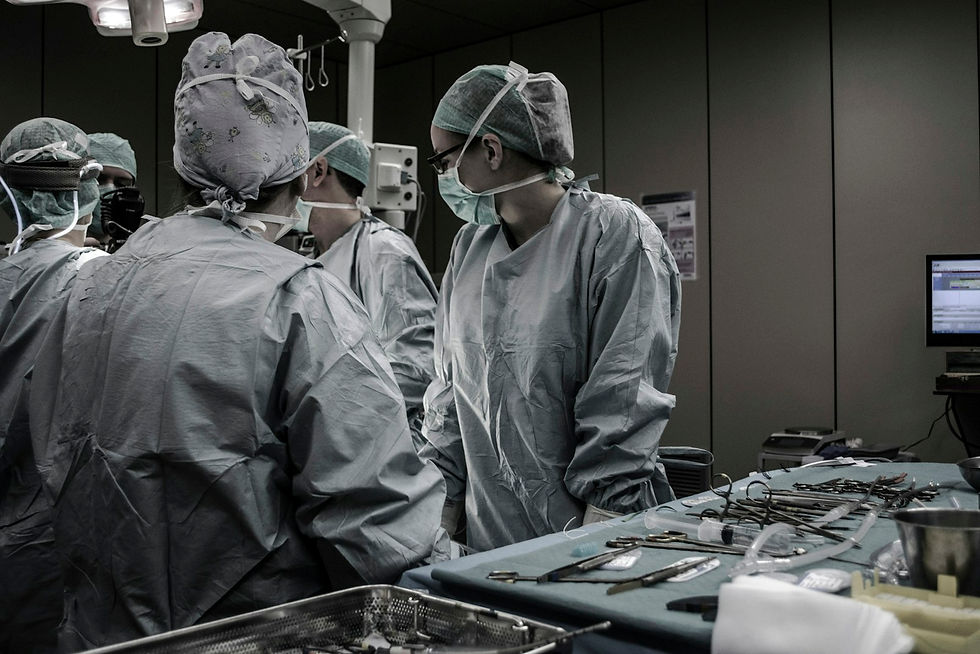
The most established applications fall into training, patient-facing support, clinical planning, rehabilitation, and communication. In education, learners can repeat rare or high-pressure cases without exposing a real patient to novice error. They can practise a procedure, recognise deteriorating conditions, coordinate a team, or handle a difficult conversation.
Virtual patients and AI healthcare avatars add a human interaction layer. A learner might take a history, explain consent, respond to distress, or choose when to escalate. Bounded dialogue and approved scenario logic can create variation while keeping the exercise aligned with clinical and educational objectives.
Medical and nursing education: anatomy, clinical reasoning, procedures, teamwork, and communication.
Surgical preparation: spatial orientation, equipment familiarisation, workflow rehearsal, and team coordination.
Emergency response: repeatable practice for uncommon, time-critical events with structured debriefing.
Mental health support: controlled exposure, relaxation, psychoeducation, or clinician-guided therapeutic exercises.
Pain and anxiety management: immersive distraction or preparation during selected procedures and recovery pathways.
Rehabilitation: motivating, repeatable movement tasks with progress feedback and adaptable difficulty.
Patient education: visual explanations of anatomy, treatment journeys, device use, and aftercare.
Hospital operations: onboarding, safety procedures, infection-control practice, and service navigation.
The common thread is experiential learning. As explained in Mimic Health XR’s guide to medical simulation in XR, a realistic scenario can connect knowledge with decisions, timing, behaviour, and consequences. It should complement educators and clinicians, not pretend to replace professional judgement.
What are the benefits of virtual reality in healthcare?

The benefits of virtual reality in healthcare depend on the use case and evidence. The clearest advantage is safe repetition. Learners can encounter the same scenario, compare approaches, apply feedback, and repeat the task until performance improves. Standardisation also allows educators to expose different learners to comparable conditions.
VR can make invisible or abstract information easier to understand. A three-dimensional model can show spatial relationships that are difficult to communicate through a flat diagram. A patient can see the steps in a care pathway. A trainee can notice how room layout, equipment placement, distractions, and other people affect a decision.
Practice without avoidable patient risk, especially for rare, sensitive, or high-consequence situations.
Consistent delivery across shifts, campuses, or regions while preserving defined learning objectives.
Immediate feedback based on choices, sequence, timing, gaze, hand position, or team actions.
Scenario variation that tests transfer instead of rewarding memorisation of a single script.
Higher learner engagement when immersion is relevant, comfortable, and linked to a clear task.
Operational insight from privacy-conscious analytics that reveal recurring errors or confusing steps.
Multisensory feedback can strengthen presence when touch, sound, resistance, or environmental cues are essential. However, multisensory VR medical training should add only the sensory information that supports the objective. More realism increases cost and complexity, and unnecessary detail can distract learners.
Decision-makers should avoid inflated claims. Improved confidence is useful but does not automatically prove improved clinical performance. Strong evaluation combines usability and learner experience with knowledge, observed behaviour, transfer to practice, patient or safety outcomes where appropriate, and the operational effort required to maintain the programme.
What are real examples of healthcare VR?

A useful healthcare VR example begins with a specific user, setting, decision, and measurable outcome. “VR for hospitals” is too broad. “Help new emergency-department nurses recognise deterioration and escalate according to local policy” is concrete enough to design, validate, and evaluate.
In procedural education, a learner may identify instruments, follow an aseptic sequence, position equipment, or rehearse a workflow before entering a skills lab. The simulation can pause at critical points, highlight consequences, and support debriefing. It does not need to reproduce every physical sensation if the objective is decision sequence and team coordination.
Communication simulations use virtual patients to practise history-taking, informed consent, empathy, cultural awareness, and de-escalation. The brand’s medical avatar guide explains how visual presence, speech, gesture, clinical content, and escalation pathways can form a repeatable conversational experience.
Rehabilitation experiences can turn prescribed movements into goal-directed tasks and adapt difficulty to progress. Mental-health applications may create controlled environments for clinician-guided exposure or calming exercises. These uses require careful screening, consent, stop controls, and pathways to human support.
Healthcare organisations can also rehearse team responses to rare emergencies or workplace-safety events. A focused VR de-escalation training programme can let staff observe behaviour cues, practise respectful boundaries, coordinate help, and learn through facilitated debriefing without using a real patient as the practice environment.
How much does healthcare VR cost to implement?

There is no single healthcare VR price because cost depends on scope. A small pilot using standard headsets and one focused scenario is very different from a multi-site platform with custom environments, AI characters, haptics, integrations, multilingual content, device management, analytics, and ongoing clinical updates.
Budget categories typically include discovery and learning design, clinical subject-matter input, 3D assets, software development, hardware, testing, deployment, facilitator training, security review, accessibility, support, content maintenance, and evaluation. Integration with identity, learning-management, electronic-record, or analytics systems adds technical and governance work.
Define one priority problem, target audience, workflow, and success measure before requesting a build.
Choose the minimum level of visual and interaction fidelity required for the learning or care objective.
Reuse approved components where appropriate, but customise clinical rules, language, roles, and local workflow.
Include device cleaning, charging, storage, updates, room safety, scheduling, and technical support in the operating model.
Plan for content review when policies, products, evidence, languages, or clinical pathways change.
Measure total cost of ownership, not only the headset or initial software-development quote.
A staged approach lowers risk. Start with a representative pilot group, test the full experience, observe where users struggle, validate the debrief and scoring process, and compare outcomes with a baseline. Scale only after the programme shows acceptable safety, reliability, usability, and learning value.
Organisations exploring a tailored programme can review Mimic Health XR’s healthcare XR services and applications and use an early discovery phase to turn a broad idea into a scoped proof of concept. The goal is not the most elaborate demonstration; it is the smallest credible intervention capable of producing useful evidence.
What are the risks and limitations of healthcare VR?

Healthcare VR can fail when novelty outruns clinical purpose. Poorly designed simulations may teach the wrong behaviour, oversimplify a complex case, create false confidence, exclude users, or collect more data than necessary. Visual realism cannot compensate for weak learning objectives, unreviewed content, unreliable hardware, or an unsafe rollout.
Physical considerations include simulator sickness, eyestrain, balance risk, fatigue, infection-control procedures, room boundaries, and headset fit. Psychological considerations include distress, triggering content, embarrassment, and pressure to participate. Mental health VR platforms need especially clear clinical boundaries, stop controls, suitability criteria, escalation routes, and qualified oversight.
Accessibility: provide seated modes, captions, audio alternatives, adjustable pace, controller options, and a non-headset route.
Privacy: minimise data, disclose collection, restrict access, define retention, and secure recordings, transcripts, and analytics.
Bias and representation: test characters, language, symptoms, environments, and scoring across intended user groups.
Clinical validity: require qualified review, version control, change approval, and traceable source material.
AI limitations: constrain generative behaviour, monitor outputs, communicate uncertainty, and preserve human escalation.
Measurement: do not treat completion time, confidence, or a proprietary score as proof of clinical competence.
Operations: anticipate connectivity, software updates, battery failure, cleaning, storage, and facilitator support.
VR should not be used when a lower-cost medium can achieve the same result more safely and accessibly. A video may be enough for a simple explanation; a mannequin may be better for a skill that depends on realistic force; supervised practice may be essential for complex patient care. Good design chooses the medium after defining the problem.
The responsible question is not “Can this be built in VR?” It is “Should this experience be immersive, for whom, under what safeguards, and how will we know it helped?” That framing keeps healthcare outcomes, dignity, and operational reality ahead of technology theatre.
Frequently asked questions
What is virtual reality in healthcare?
It is the use of immersive, interactive digital environments for healthcare training, education, treatment support, rehabilitation, planning, communication, or patient engagement.
How is VR currently used in hospitals?
Hospitals use VR for staff education, procedural rehearsal, emergency and communication simulations, patient education, selected pain or anxiety support, rehabilitation, onboarding, and safety training.
What is the biggest benefit of VR in healthcare?
Safe, standardised repetition is one of the clearest benefits. Users can practise, receive feedback, and repeat difficult situations without exposing a real patient to avoidable training risk.
Can virtual reality replace clinical training?
No. VR can strengthen practice and assessment, but it should sit inside a wider programme that includes expert instruction, hands-on skills, supervised clinical experience, debriefing, and governance.
Is healthcare VR safe for every patient or learner?
Not automatically. Programmes should assess physical and psychological suitability, provide stop controls and accessible alternatives, manage hygiene and room safety, and involve qualified professionals where needed.
How much does virtual reality in healthcare cost?
Cost varies by scenario complexity, hardware, custom assets, AI or haptics, integrations, review, deployment scale, support, and maintenance. A focused pilot is the best way to establish realistic total cost and value.
Does VR improve patient outcomes?
Some applications show promise, but outcomes depend on the intervention, population, evidence, and implementation. Organisations should evaluate each use case rather than assuming immersion itself improves care.
What equipment is needed for healthcare VR?
A programme may need standalone or tethered headsets, controllers or hand tracking, compatible computers, charging and storage, cleaning supplies, a safe physical area, device management, and support processes.
How should a hospital choose a healthcare VR partner?
Look for clinical co-design, clear objectives, accessibility, privacy and security, realistic deployment support, maintainable content, transparent measurement, and experience connecting 3D interaction with healthcare workflows.
What is the difference between VR, AR, and mixed reality in healthcare?
VR replaces the user’s view with a digital environment. AR overlays information on the real world. Mixed reality anchors interactive digital objects into physical space. The right format depends on the task.
Conclusion
Virtual reality in healthcare is most valuable when it makes a specific experience safer to practise, easier to understand, or more consistent to deliver. Training, patient education, rehabilitation, planning, and communication can all benefit, but only when the clinical purpose, user needs, safeguards, and measures are defined before development.
Ready to test a focused healthcare XR use case? Talk to Mimic Health XR about a clinically grounded pilot using immersive 3D environments, virtual patients, and measurable interaction design.


Comments