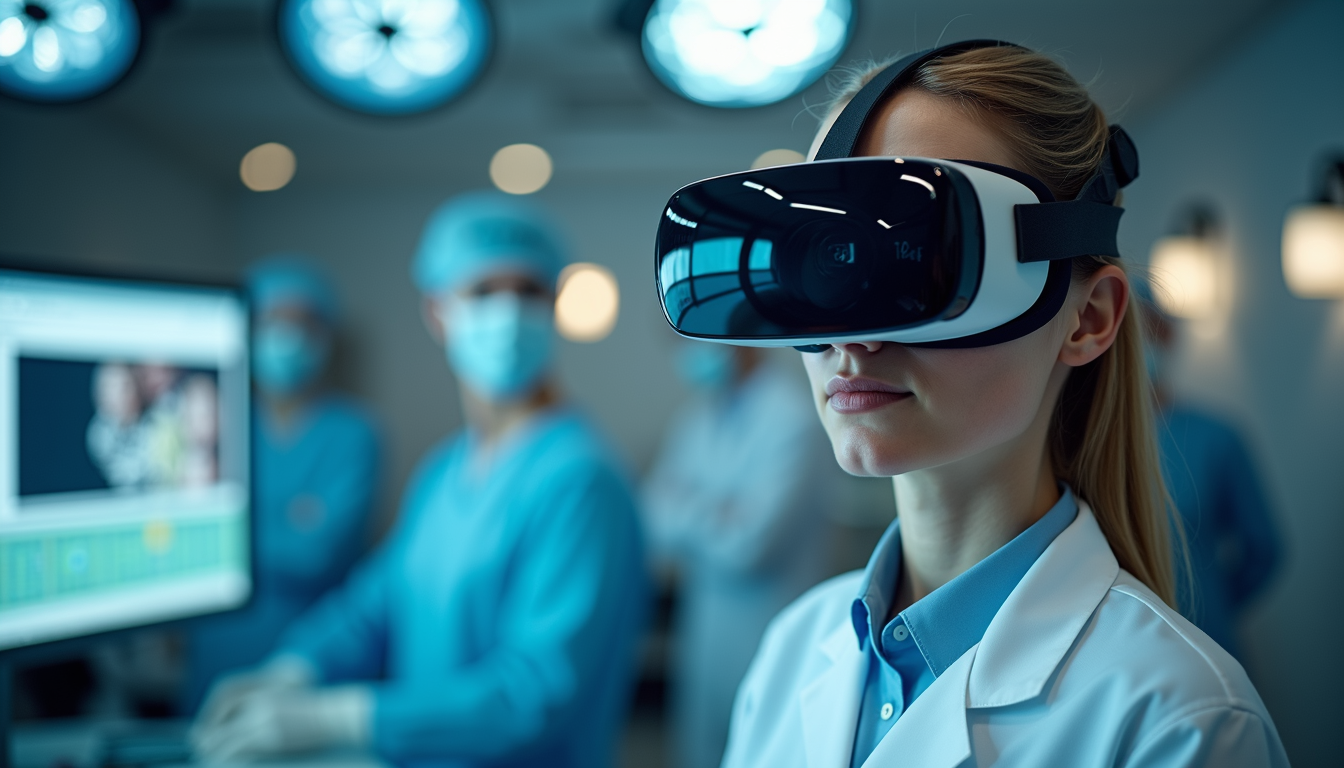
Healthcare today faces unprecedented challenges. Rapid advancements in medical knowledge, the complexity of procedures, and the critical need for precision demand innovative training methods. Immersive medical training, powered by extended reality (XR) and artificial intelligence (AI), is transforming how healthcare professionals learn and practice. This technology bridges the gap between theoretical knowledge and real-world application, enhancing skills, confidence, and ultimately patient outcomes.
You can explore how 3d medical training is reshaping healthcare education and why it matters now more than ever.
What Is Immersive Medical Training and Why It Matters
Immersive medical training uses virtual reality (VR), augmented reality (AR), and mixed reality (MR) to create realistic, interactive simulations of medical environments and procedures. Unlike traditional training methods, which rely heavily on textbooks, videos, or cadaver labs, immersive training places you inside a lifelike scenario where you can practice skills repeatedly without risk to patients.
This approach addresses several pressing healthcare challenges:
Skill retention: Hands-on practice in a controlled environment improves memory and muscle coordination.
Patient safety: Mistakes in training do not harm real patients.
Accessibility: Training can be done anytime, anywhere, reducing the need for physical resources.
Standardization: Ensures consistent training quality across institutions and regions.
By integrating AI, these simulations adapt to your learning pace and provide personalized feedback, making the experience more effective and engaging.
How Immersive Medical Training Works
Immersive medical training combines several cutting-edge technologies to create a seamless learning experience:
3D Anatomical Models: Detailed, accurate representations of human anatomy allow you to explore organs, tissues, and systems in three dimensions.
Simulated Procedures: You can perform surgeries, diagnostic tests, or emergency interventions in a virtual setting that mimics real-life conditions.
Haptic Feedback: Advanced devices provide tactile sensations, so you feel resistance or texture, enhancing realism.
AI-Driven Analytics: The system tracks your actions, identifies errors, and suggests improvements tailored to your skill level.
Collaborative Environments: Multi-user platforms enable team training, improving communication and coordination.
These elements combine to create a dynamic, immersive experience that accelerates learning and builds confidence.
How Much Is an Anatomage Machine?
The Anatomage Table is a prominent example of advanced medical visualization technology. It offers a life-sized, interactive 3D display of human anatomy, allowing you to dissect and explore virtual cadavers with remarkable detail.
Pricing Overview:
The cost of an Anatomage Table typically ranges from €80,000 to €120,000, depending on the model and included software packages.
Additional expenses may include maintenance, software updates, and training for users.
While the initial investment is significant, the table’s ability to replace physical cadavers and enhance training efficiency can justify the cost over time.