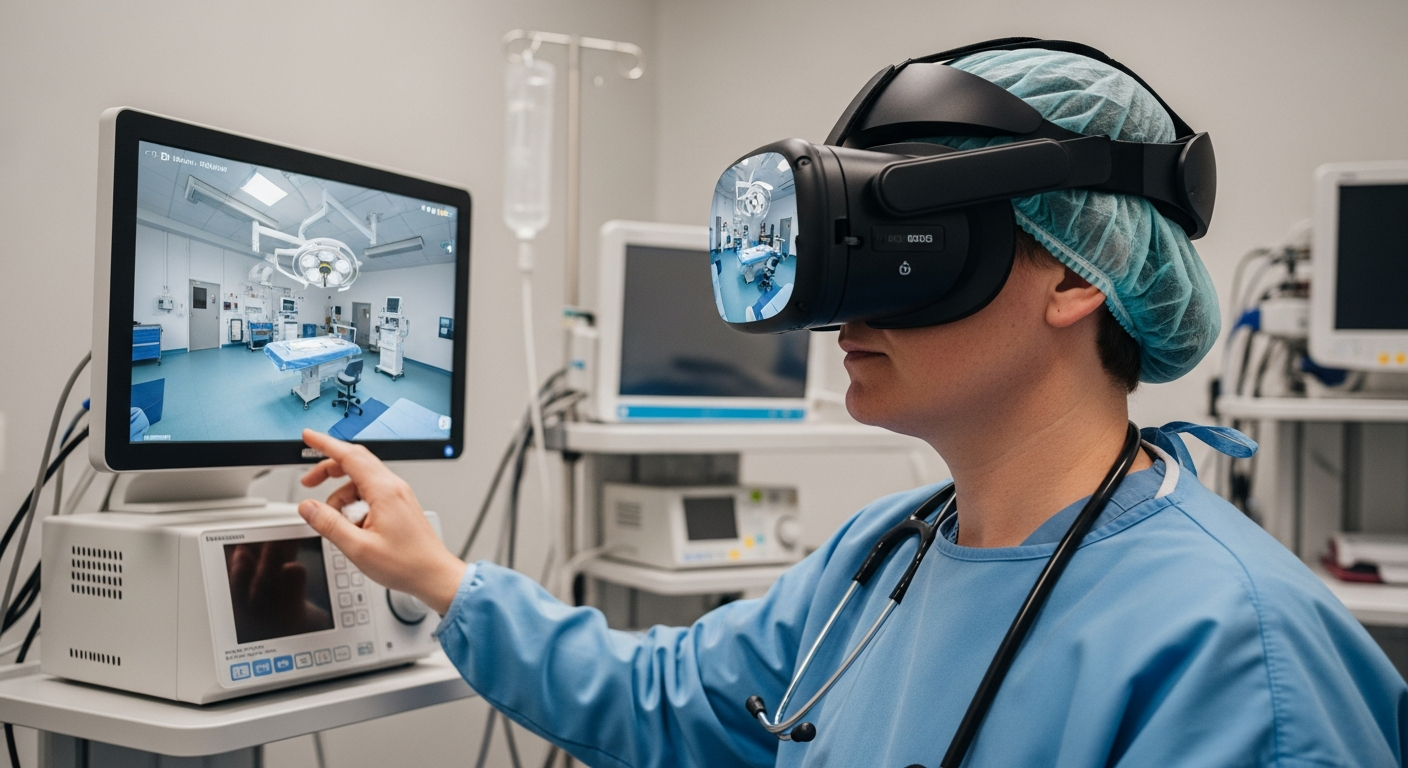
Healthcare systems are under increasing pressure to improve efficiency, reduce errors, and design environments that support both patients and clinical staff. Traditional hospital planning methods rely heavily on blueprints, static models, and limited physical mockups, which often fail to capture how real clinical workflows unfold. Virtual reality healthcare solutions are changing this by allowing hospitals to simulate spaces, processes, and patient journeys long before construction or operational changes take place.
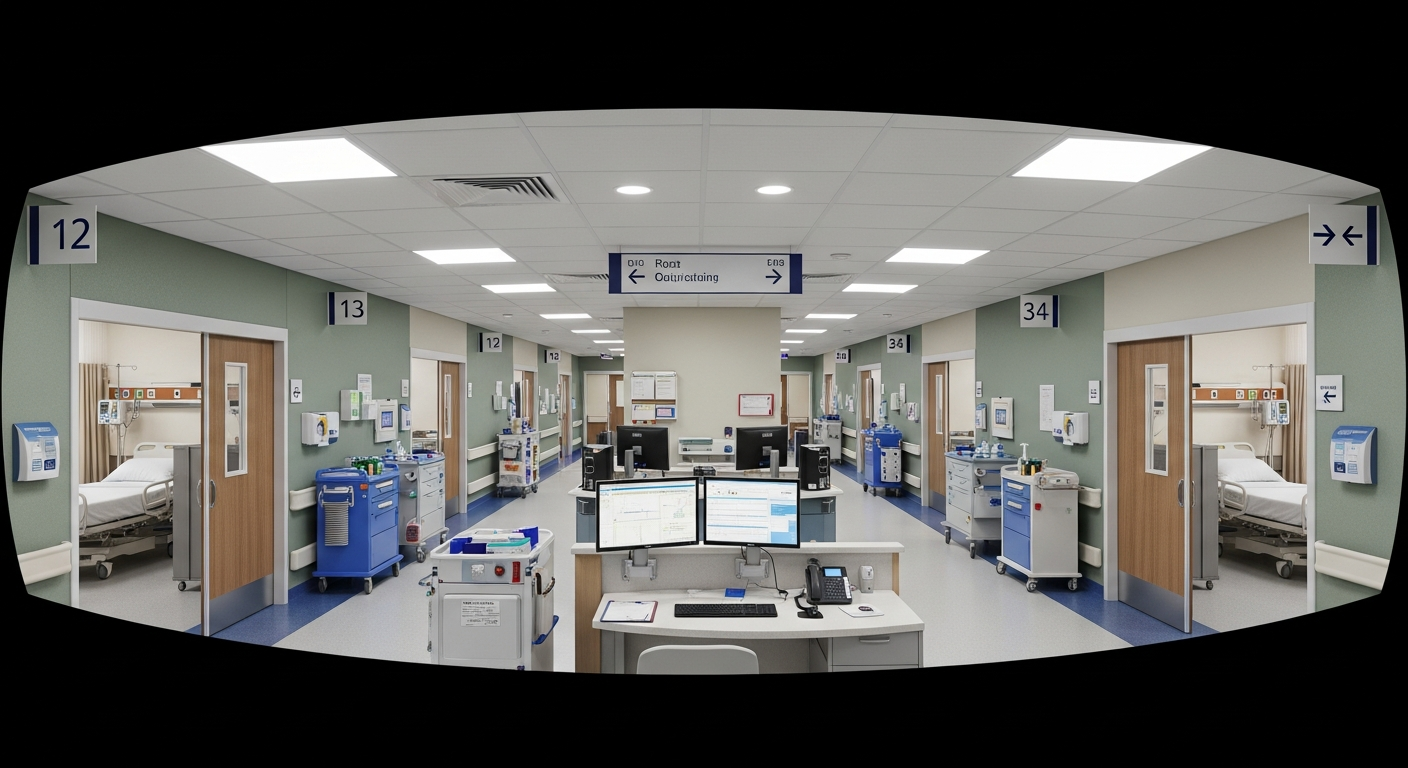
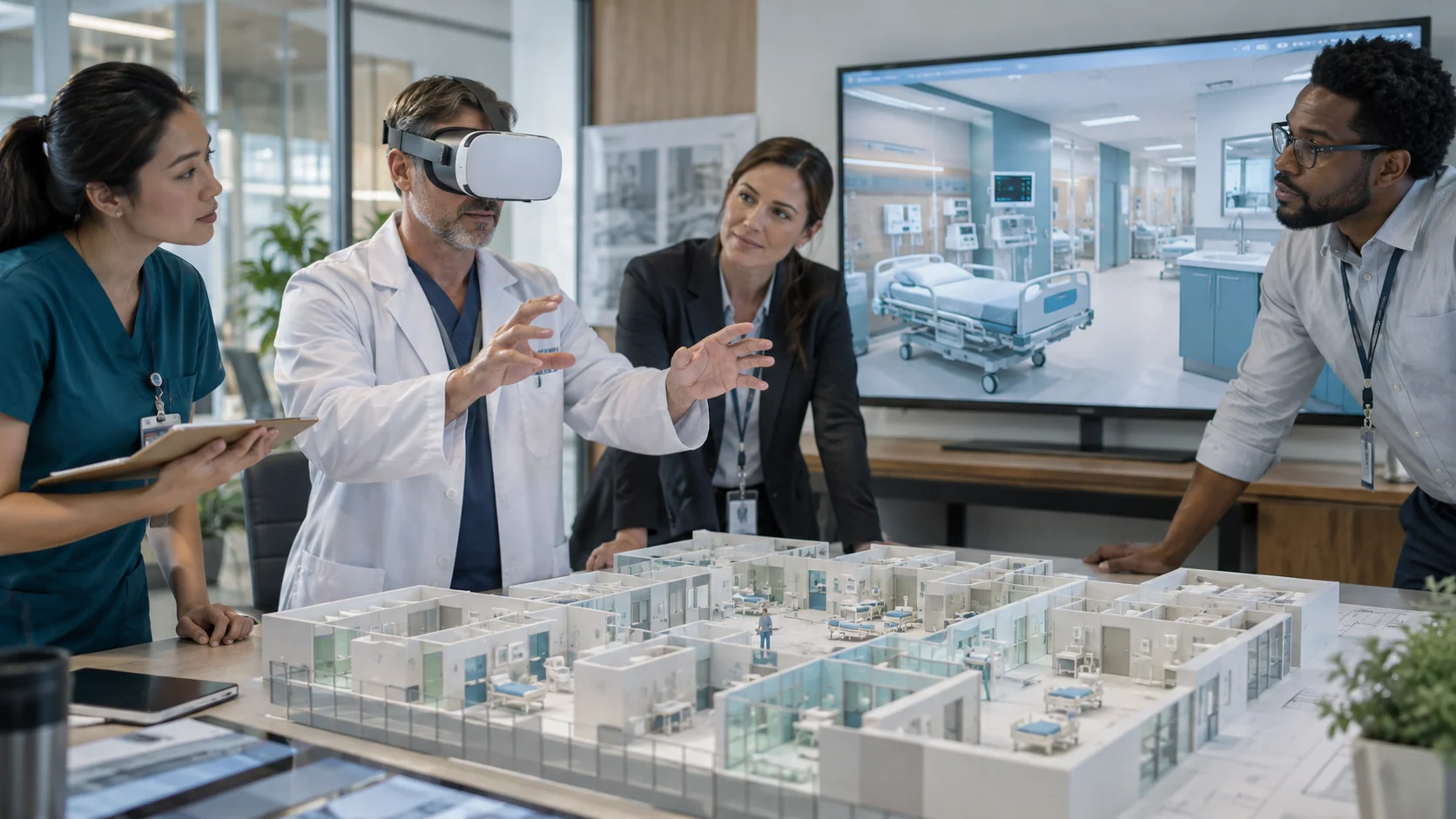
Using immersive VR environments, healthcare leaders can walk through digital hospital layouts, test workflows, evaluate safety risks, and refine operational design decisions with real-world accuracy. This approach improves collaboration between architects, clinicians, administrators, and technology teams while reducing costly design mistakes. Platforms such as Mimic Health XR support this shift by combining immersive simulation, spatial visualization, and data-driven healthcare workflows.
This article explores how virtual reality is used in hospital design and workflow simulation, and why it is becoming essential for modern healthcare systems.
Table of Contents
What is a virtual reality healthcare simulation?
Virtual reality healthcare simulation uses immersive 3D environments to recreate hospital spaces, medical departments, and operational workflows. Users wear VR headsets or use immersive displays to experience these environments as if they were real.
Hospitals use VR simulations to:
visualize architectural layouts
test patient pathways
rehearse emergency response
analyze staff movement and task sequences
evaluate equipment placement
identify design bottlenecks
These simulations are supported by spatial technologies similar to those described on the Mimic Health XR tech platform.
VR turns abstract planning into experiential decision-making.
Why hospitals use VR for design and planning?
Hospital design decisions are expensive and difficult to reverse once implemented. VR allows stakeholders to identify issues early and make informed changes.
Hospitals adopt VR planning because it: