
← All insights

Healthcare journal

What a Virtual Health Assistant Can Do for Clinics and Hospitals

A real clinician reviewing a virtual health assistant dashboard at a slightly cluttered workstation.

Clinic teams selecting a virtual health assistant need to decide what it will handle, who maintains its answers and when a person takes over. This guide focuses on appointment preparation, reception questions and follow-up administration in a clinic setting. Hospital integration and patient engagement measurement are covered in the related guides.

Compare suppliers against a clinic service brief

List the reception questions the clinic is prepared to answer digitally, the languages needed and the opening hours of the human support team. Ask each supplier to demonstrate those same tasks using approved sample information. Include a visitor who prefers telephone support and a request the assistant is not permitted to answer.

Evaluate content editing, staff access, conversation export, escalation routing and ongoing support costs. Give one person responsibility for updating service information when clinic arrangements change. Start with a narrow administrative use case and document how the clinic will withdraw or correct an answer.
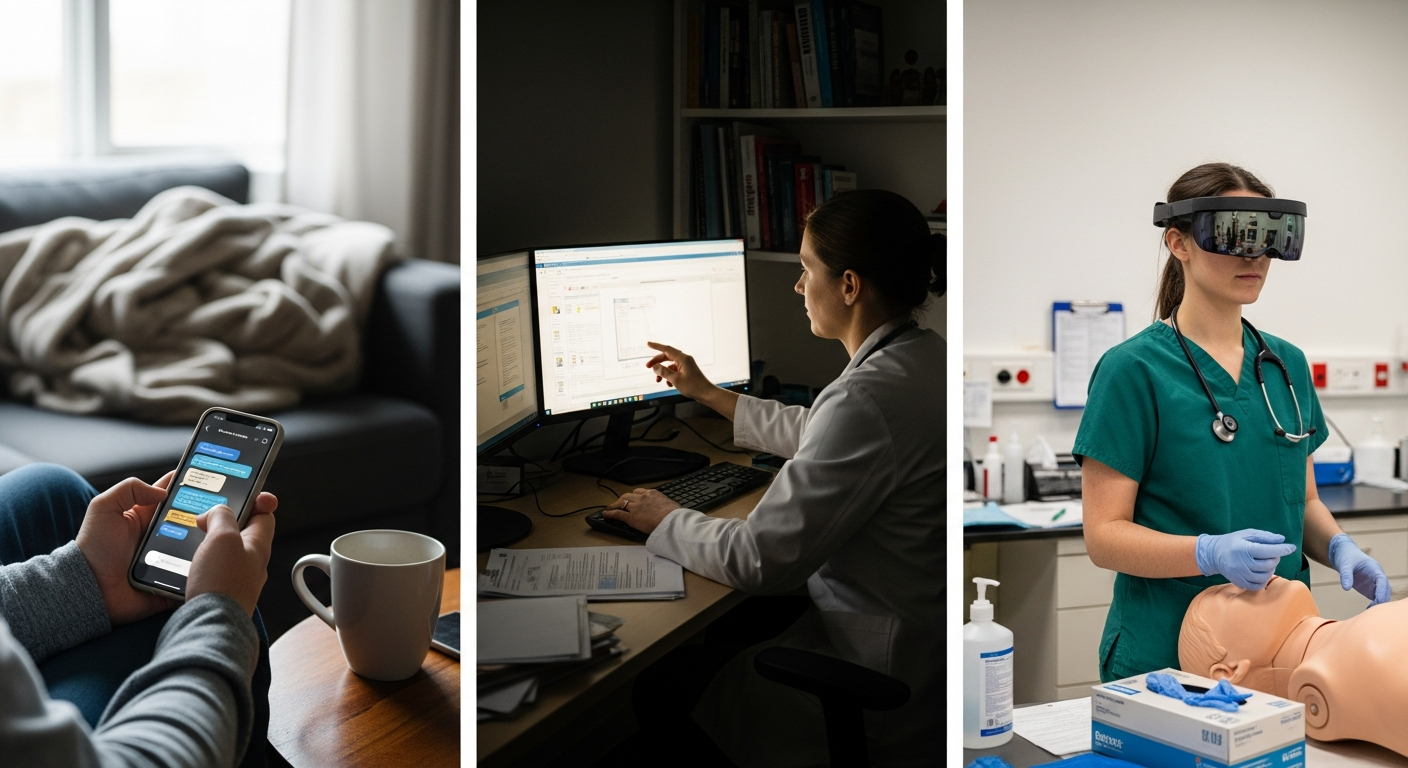

Three realistic scenes showing conversational, clinical, and XR-based virtual health assistants in everyday medical settings.

1. Improving Patient Engagement & Support

Patients often have questions outside of normal clinic hours — symptoms, medication instructions, or scheduling needs. Virtual assistants serve as always-available companions that respond instantly and accurately.


They help with:

  • Appointment booking and reminders

  • Medication instructions

  • Post-surgery care guidelines

  • Symptom checking and escalation

  • Mental health check-ins

This improves patient satisfaction and reduces the pressure on support teams.


2. Reducing Administrative Work for Hospitals

Healthcare staff face enormous administrative workloads — from scheduling to documentation to follow-up communication.

Virtual health assistants automate tasks like:

  • Patient intake

  • Insurance FAQs

  • Follow-up reminders

  • Routing inquiries to the correct department

  • Gathering symptoms before appointments

This allows medical teams to focus on higher-level care.


5. Supporting Telehealth & Remote Care

Virtual assistants help clinicians deliver remote consultations more efficiently by preparing patients beforehand and offering follow-up care afterwards.

Use cases include:

  • Digital intake before telehealth calls

  • Remote patient monitoring

  • Chronic disease management

  • Psychosocial support

  • Virtual rehab check-ins

This ensures continuity of care without requiring in-person visits.


A realistic hospital reception desk where staff use a virtual health assistant to manage scheduling and support tasks.

Challenges of Implementing Virtual Health Assistants

  • Integration with existing EHR systems can be complex

  • Staff training is needed to encourage adoption

  • Strong data privacy standards must be met

  • High-quality content is essential for accuracy

  • Patient trust must be built through reliable performance

Most organizations overcome these challenges with phased rollouts and continuous improvement.


Related reading

Back to insights