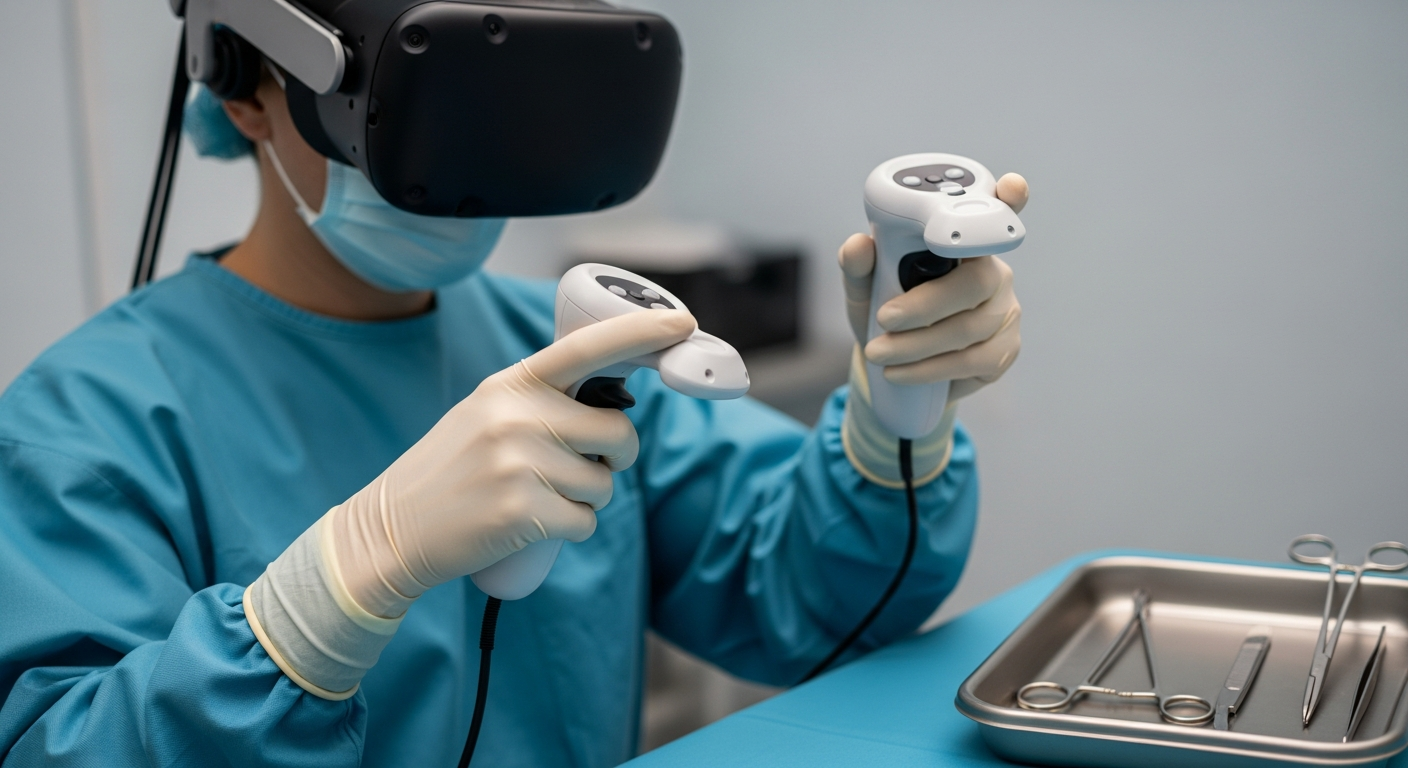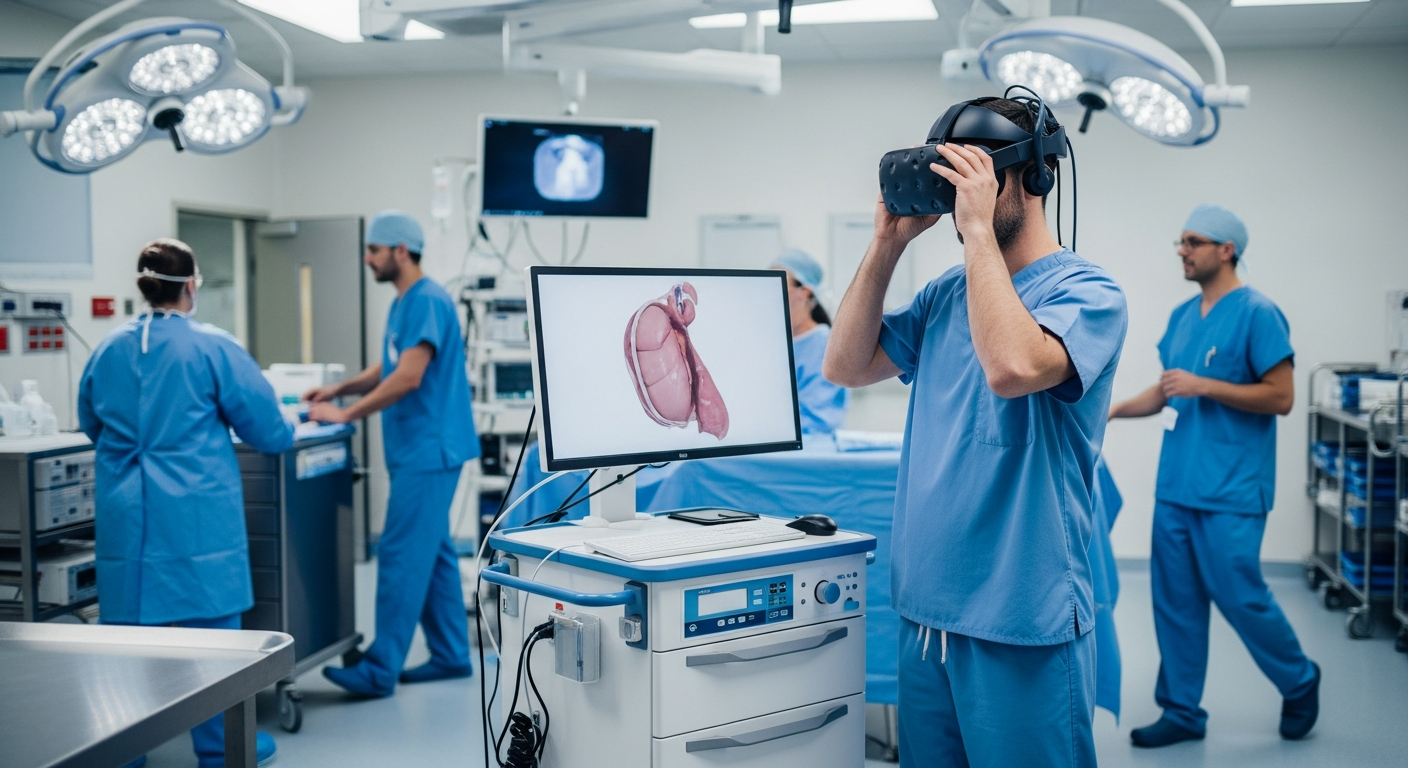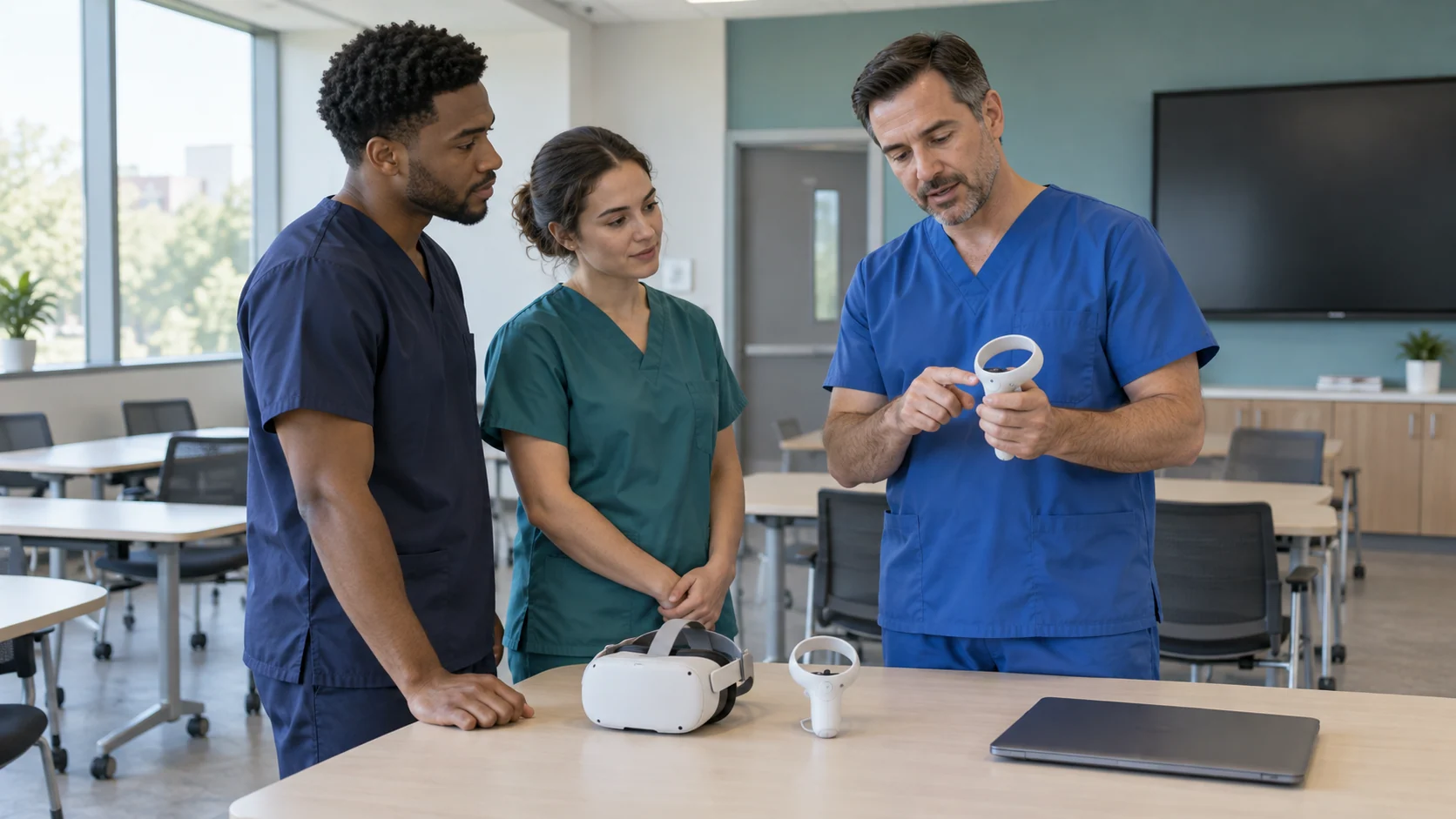
VR surgery training is changing how surgeons learn, practice, and prepare for real procedures. Instead of relying solely on supervised operating room exposure or irregular simulation lab sessions, VR allows surgical trainees to rehearse skills repeatedly inside highly controlled, immersive environments. These virtual settings offer realistic anatomy, step-by-step procedural practice, and instant feedback that helps clinicians learn faster with fewer risks.
Hospitals are adopting VR surgical training because it improves safety, enhances confidence, and reduces variability in skill levels. When surgeons arrive in the operating room with VR practice behind them, they perform with stronger precision and fewer mistakes. This shift is becoming essential as hospitals face increased surgical demand and rising pressure to reduce complications, OR delays, and overall risk.
Table of Contents
What is VR surgery training?
VR surgery training uses immersive virtual environments to teach surgeons procedural steps, anatomical understanding, and situational judgment. Instead of watching instruction videos or practicing only on physical models, trainees interact with realistic digital tissue, instruments, and patient models.
Many institutions adopt VR modules after seeing how immersive practice improves readiness in similar VR medical training programs.
VR surgical systems include:
anatomy simulation
step based surgical guidance
interactive tools
haptic feedback in some platforms
real time performance scoring
These systems create a safe and highly repeatable learning environment.
Why are hospitals adopting VR training for surgeons?
Hospitals face challenges such as limited OR training time, variable case volume, and the high cost of supervised instruction. VR reduces these barriers by allowing trainees to:
practice anytime
rehearse at their own pace
prepare for cases before performing them on real patients
explore anatomy in 3D
learn without scheduling constraints
This improves training efficiency while supporting clinicians with realistic practice.