Virtual Reality (VR) has quickly become one of the most powerful innovations shaping the future of medical education. Instead of relying solely on textbooks, cadavers, or classroom lectures, today’s students and clinicians can step into fully immersive, interactive learning environments that replicate real medical situations with astonishing accuracy.
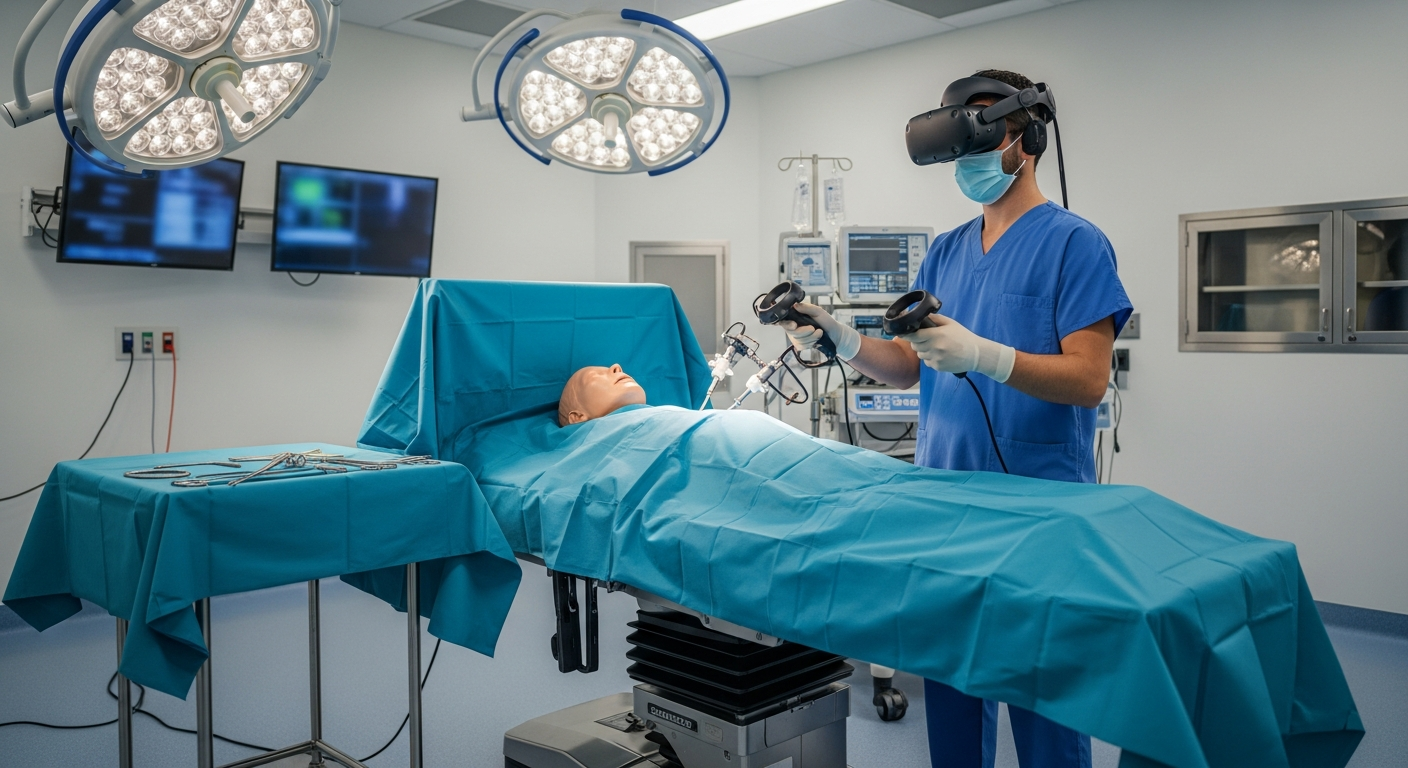
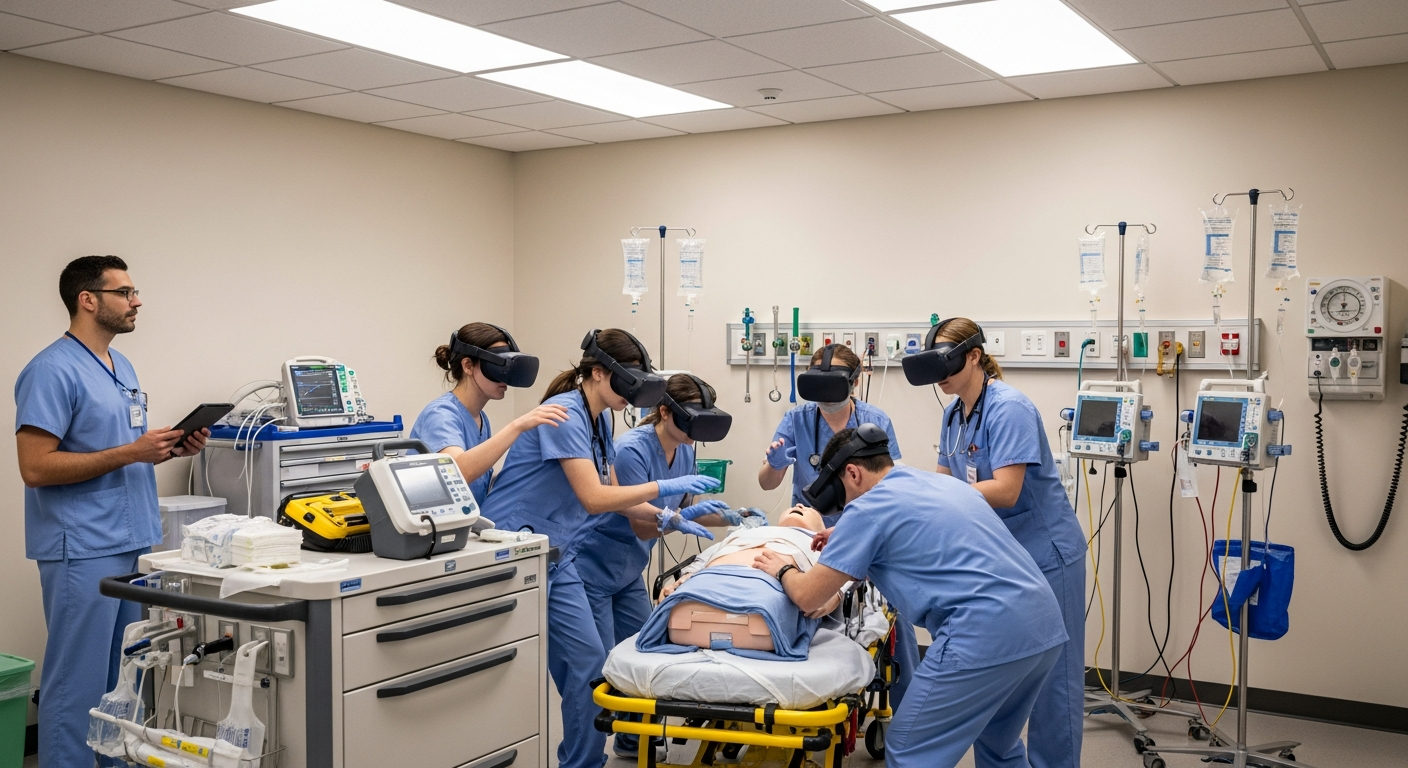
VR medical training allows learners to handle virtual instruments, explore anatomy in 3D, rehearse surgical procedures, and respond to high-pressure clinical emergencies—without any risk to real patients. As medical schools worldwide adopt VR-based education, the shift is redefining how future clinicians learn, practice, and master essential skills.
Innovators like Mimic Health XR are at the forefront of this transformation, demonstrating through their 3D Medical Training: A New Frontier in Healthcare insights how VR and mixed reality are reshaping clinical competency and healthcare excellence. With VR now merging with AI, real patient data, and advanced 3D simulations, medical training is entering an era where experiential learning becomes the new standard.
What Is VR Medical Training?
VR medical training uses immersive virtual environments to teach medical students, nurses, and clinicians through realistic simulations. Using VR headsets, learners interact with clinical scenarios, surgical procedures, patient cases, and anatomical structures in a fully 3D environment.
VR medical training includes:
Anatomy exploration
Surgical practice
Procedure walkthroughs
Trauma and emergency simulations
Diagnostic problem-solving
Team-based clinical scenarios
This immersive learning approach dramatically improves understanding, confidence, and retention.
How VR Is Transforming Medical Education
Traditional medical training relies on textbooks, lectures, and limited hands-on opportunities. VR changes this by enabling continual, repeatable, interactive practice.
VR revolutionizes education by:
Offering realistic environments without risk
Allowing unlimited practice and replay
Standardizing training quality across institutions
Reducing dependency on cadavers or physical facilities
Providing immediate feedback and assessment
The integration of VR and mixed reality—explored deeply in Transforming Healthcare with Virtual and Mixed Reality —shows how immersive tech is fundamentally reshaping medical pathways.
VR for Anatomy Learning & 3D Visualization
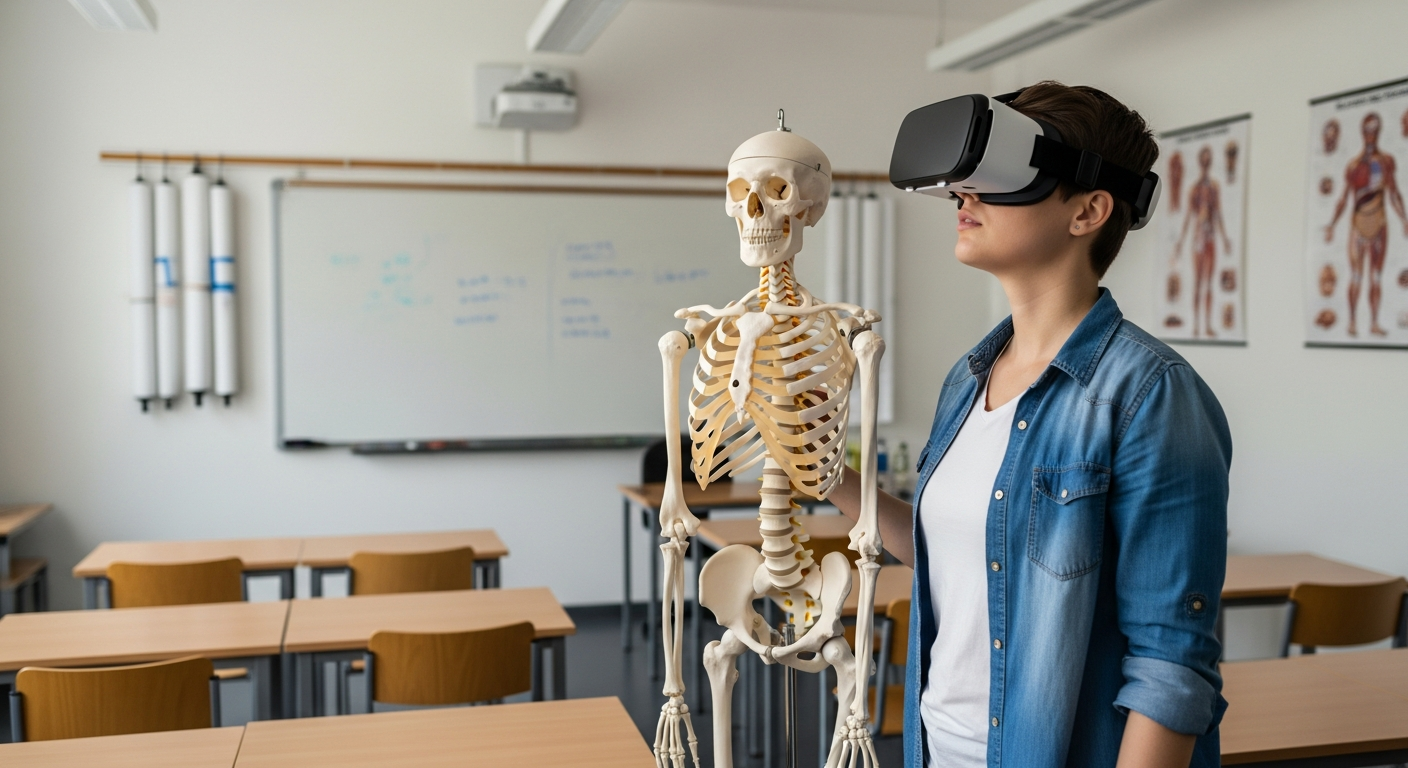
Understanding anatomy is foundational for all clinicians. VR turns static diagrams into dynamic, explorable, full-scale 3D models.
VR enhances anatomy learning by:
Allowing students to walk around organs and systems
Showing layers of muscles, nerves, and vessels
Offering interactive quizzes and labeling exercises
Visualizing variations in human anatomy
Linking anatomy to real-case clinical scenarios
This leads to deeper retention and a more intuitive grasp of the human body.
VR Surgical Training & Skill Acquisition
VR allows future surgeons to rehearse procedures in a safe, controlled environment—building confidence and precision before entering the operating room.