Can VR training for nurses make clinical simulation more realistic, repeatable, and safe?
VR training for nurses is becoming a practical way to close the gap between classroom theory, simulation-lab practice, and the pressure of real clinical environments. Nursing teams need safe repetition before high-stakes moments, but traditional simulation can be limited by room availability, instructor time, standardized patient scheduling, and the cost of running complex scenarios for large cohorts.
Immersive healthcare training changes that rhythm. With virtual patients, interactive hospital spaces, AI avatars, and measurable scenario data, educators can give nurses realistic practice without putting patients at risk. For Mimic Health XR, this topic connects directly with medical education and training, hospital safety protocols, AI avatars, 3D simulations, and patient education experiences.
Table of Contents
What VR training for nurses means
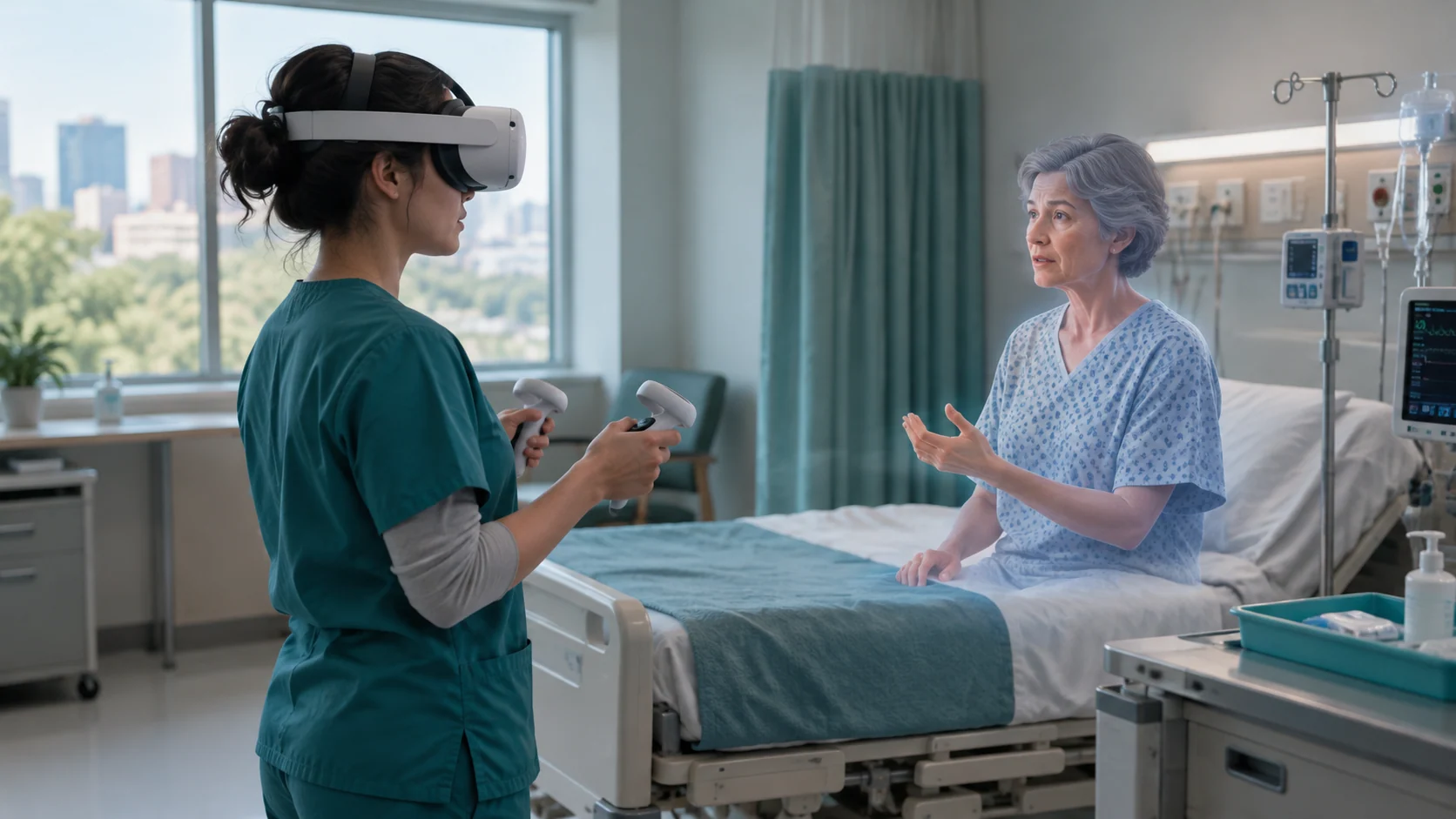
VR training for nurses uses immersive environments to help learners practice clinical thinking, communication, safety checks, teamwork, and procedural steps. Instead of only reading a case or watching an instructor demonstrate a process, learners enter a simulated clinical scene. They can assess a virtual patient, make choices, receive feedback, and repeat the scenario until the behavior becomes more confident.
The strongest nursing VR programs do not try to replace every part of clinical education. They extend it. A simulation lab is still valuable for hands-on equipment and instructor debriefing. Clinical placements are still essential for professional development. VR fills a different role: scalable practice for rare events, stressful conversations, workflow decisions, and scenarios that are too expensive or risky to repeat frequently in real life.
That difference is important for educators and hospital leaders. VR is not a novelty layer placed on top of nursing education. It is a structured practice environment where the same clinical case can be experienced consistently, measured consistently, and improved over time. A learner can make mistakes in a private rehearsal space, then bring better questions and stronger confidence into instructor-led debriefing.
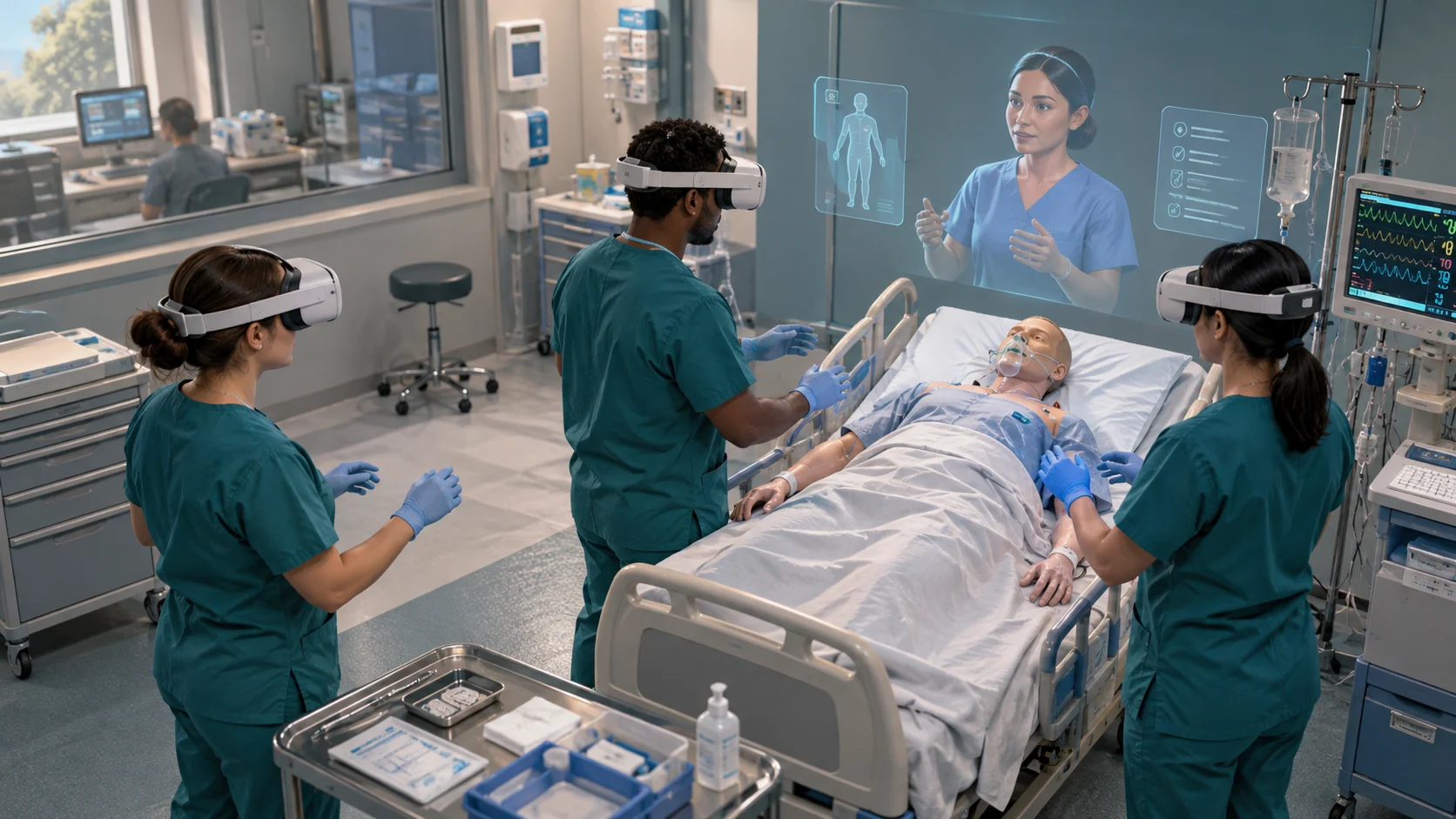
This is why VR belongs beside Mimic Health XR's broader 3D simulations and healthcare XR applications. A single immersive training system can support onboarding, continuing education, compliance refreshers, interprofessional rehearsal, and patient-safety culture.
Why virtual patient simulation matters
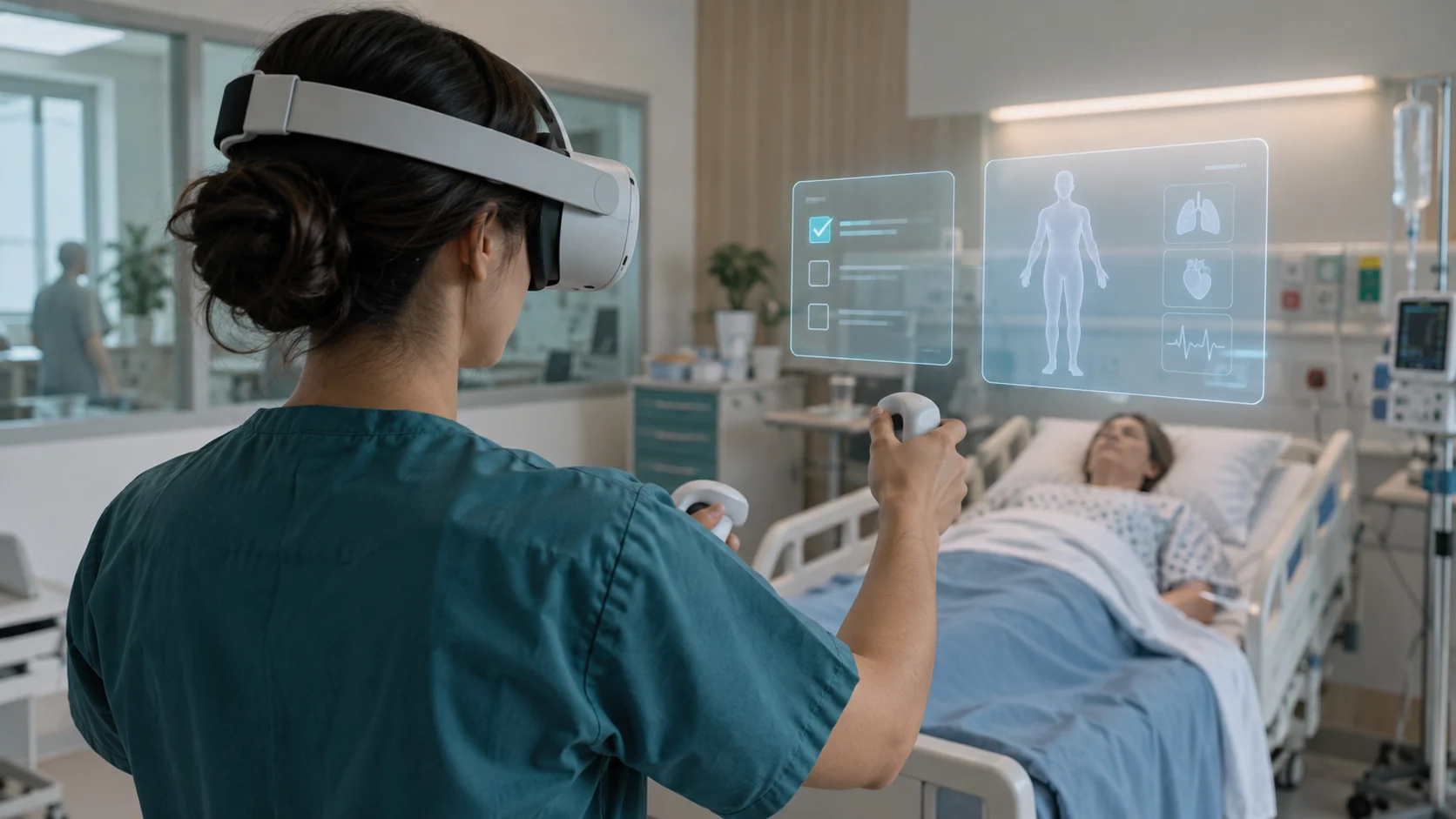
Virtual patient simulation matters because nursing is not just a checklist of technical tasks. Nurses interpret subtle cues, prioritize competing risks, communicate under pressure, coordinate with other professionals, and decide when a situation is changing. A well-designed virtual patient can show symptoms, answer questions, react emotionally, worsen over time, or respond to the learner's choices.