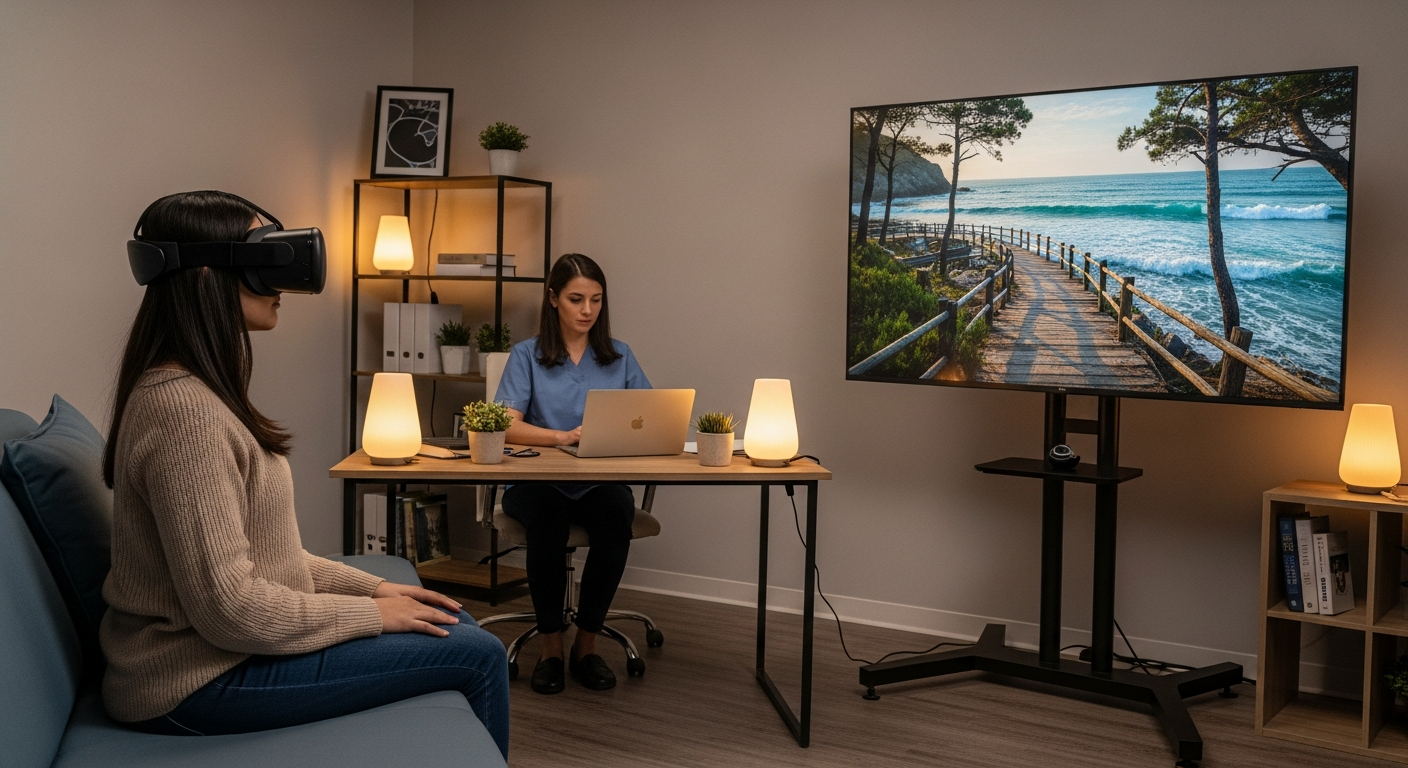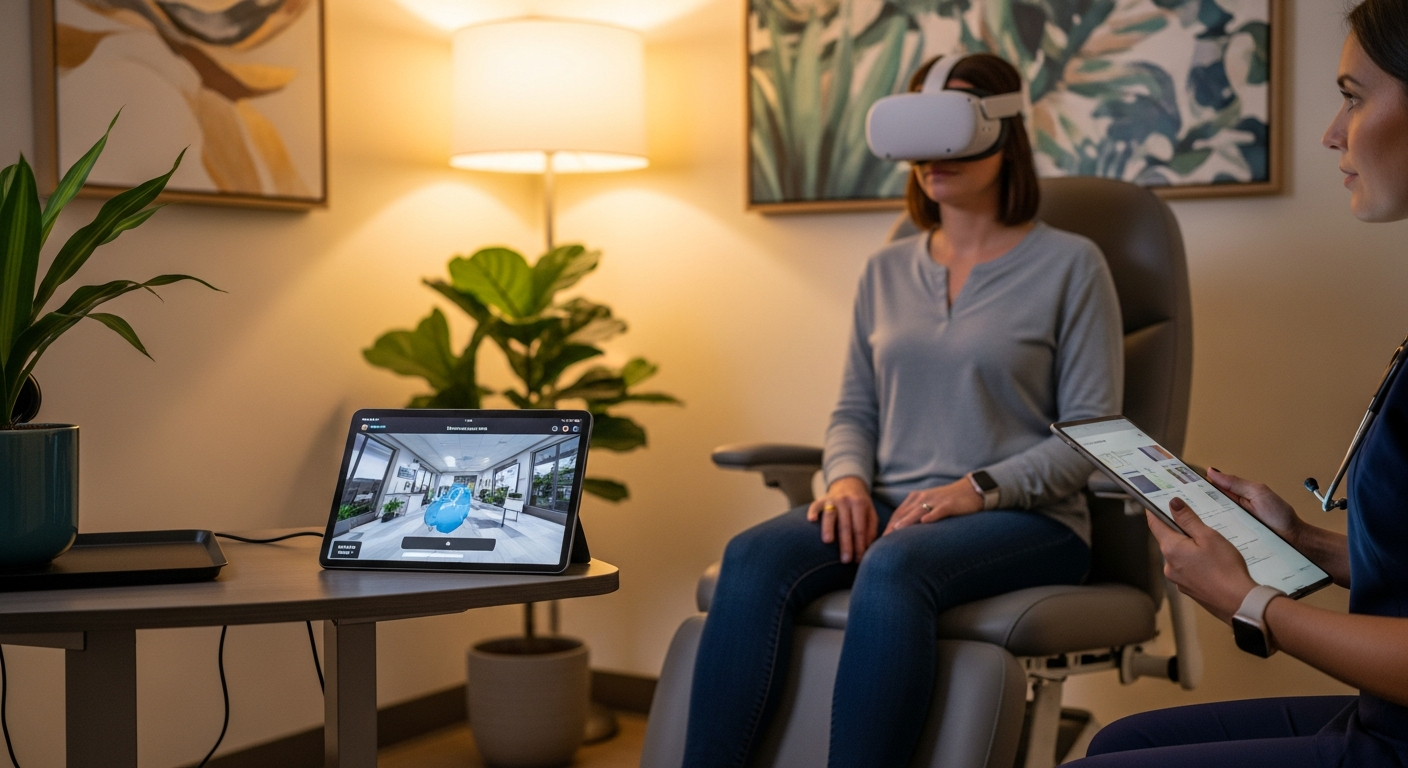
XR adds a delivery environment to a digital program: a headset or spatial interface, interaction design and a supervised session workflow. This article examines those delivery choices for teams planning immersive experiences. It does not establish the therapeutic effectiveness of a product; the chronic-care guide addresses evidence and pathway selection.
Specify the session and supervision model
Document where a session takes place, who helps with setup, which inputs the participant uses and how they can stop or request assistance. The design brief should describe seated or standing use, alternative interfaces and the information staff need before and after a session. Validate these arrangements with the team responsible for the program.
Separate interaction feedback from clinical decisions. Define which events the software records and who reviews them. Pilot the practical delivery conditions, including equipment availability and staff support, before treating a visually engaging experience as a deployable service.
2. Immersive XR Environments Enhance Patient Engagement
One of the biggest challenges in digital therapeutics is patient adherence.Many individuals struggle to stay consistent with app-based or text-based interventions because the experience lacks emotion and interactivity.
XR changes this dramatically.
Immersive DTx environments offer:
greater motivation through gamified elements
emotional presence that encourages learning
distraction-free sessions
higher enjoyment and engagement
stronger feeling of accomplishment
Patients feel that the therapy is happening with them — not to them.
Clinical impact:
improved adherence
increased session completion
stronger long-term behavioral change
higher patient satisfaction
Engagement is one of the strongest predictors of DTx success, and XR amplifies it.
3. XR Digital Therapeutics for Mental and Behavioral Health
Mental health is one of the areas where XR-based digital therapeutics show extraordinary promise.
Potential XR therapeutic modules include:
immersive anxiety exposure therapy
mindfulness and relaxation environments
guided breathwork visualized in 3D
emotional resilience training
cognitive behavioral therapy walkthroughs
safe-space environments for trauma recovery
These experiences are more impactful than 2D content because they engage the brain’s sensory, cognitive, and emotional centers simultaneously.
Benefits for mental health patients:
reduced anxiety
improved emotional regulation
stronger therapeutic immersion
easier habit adoption
safer exposure therapy
For conditions like PTSD, phobias, generalized anxiety, and depression, XR-based DTx is rapidly emerging as a breakthrough modality.
4. XR-Powered Physical Rehabilitation and Motor Recovery
Rehabilitation often requires repetition, proper form, and incremental progress — but patients struggle with engagement, discipline, and clarity of instruction.
XR rehabilitation environments guide patients through exercises using spatial cues, holographic alignment systems, and real-time posture correction.
These immersive therapy experiences align naturally with the structured learning seen in
VR medical training methods that transform clinician readiness — but focused directly on patient recovery.
XR rehabilitation enables:
full-body tracking for accurate movement analysis
holographic guides for joint alignment
progress visualization
adaptive difficulty adjustment
gamified motor skill exercises
motion feedback that prevents harmful technique
The result: faster rehab, safer recovery, and higher patient adherence.