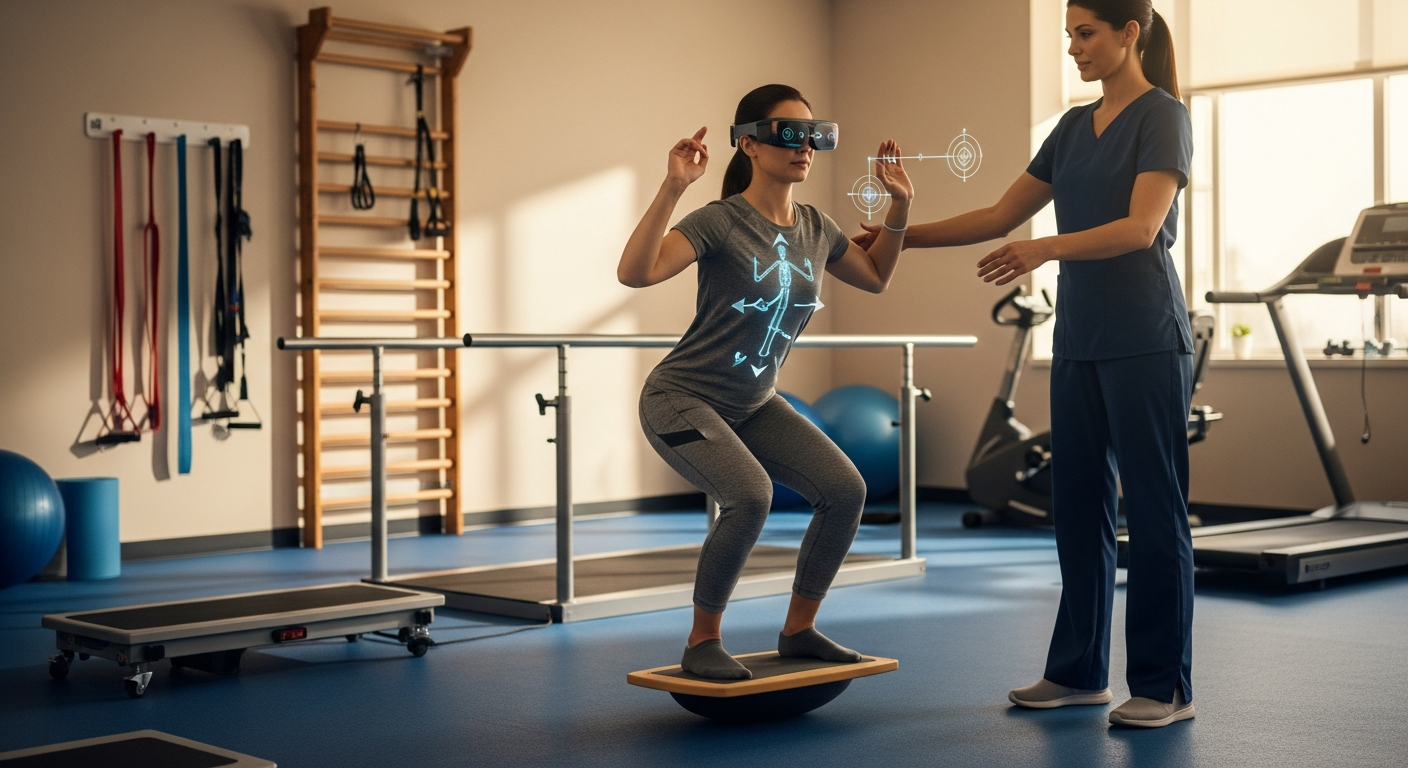
For medical educators, augmented reality is a teaching interface that places digital material in a shared view of the physical world. This article focuses on anatomy exploration, guided skill practice and feedback for doctors and students. Hospital procurement and deployment decisions are addressed in the companion AR assessment guide.
Write the teaching task before choosing the AR display
Choose what learners should be able to explain or demonstrate after the activity. Decide which labels, models and prompts help them do it, and which distract from the objective. Plan how an educator observes the same material and how learners discuss their choices together.
Compare the AR activity with the teaching method already used for that objective. Collect observations on legibility, interaction and explanation quality. Include an alternative way to access the content so participation does not depend on one device or display mode.
What Is Augmented Reality in Healthcare?
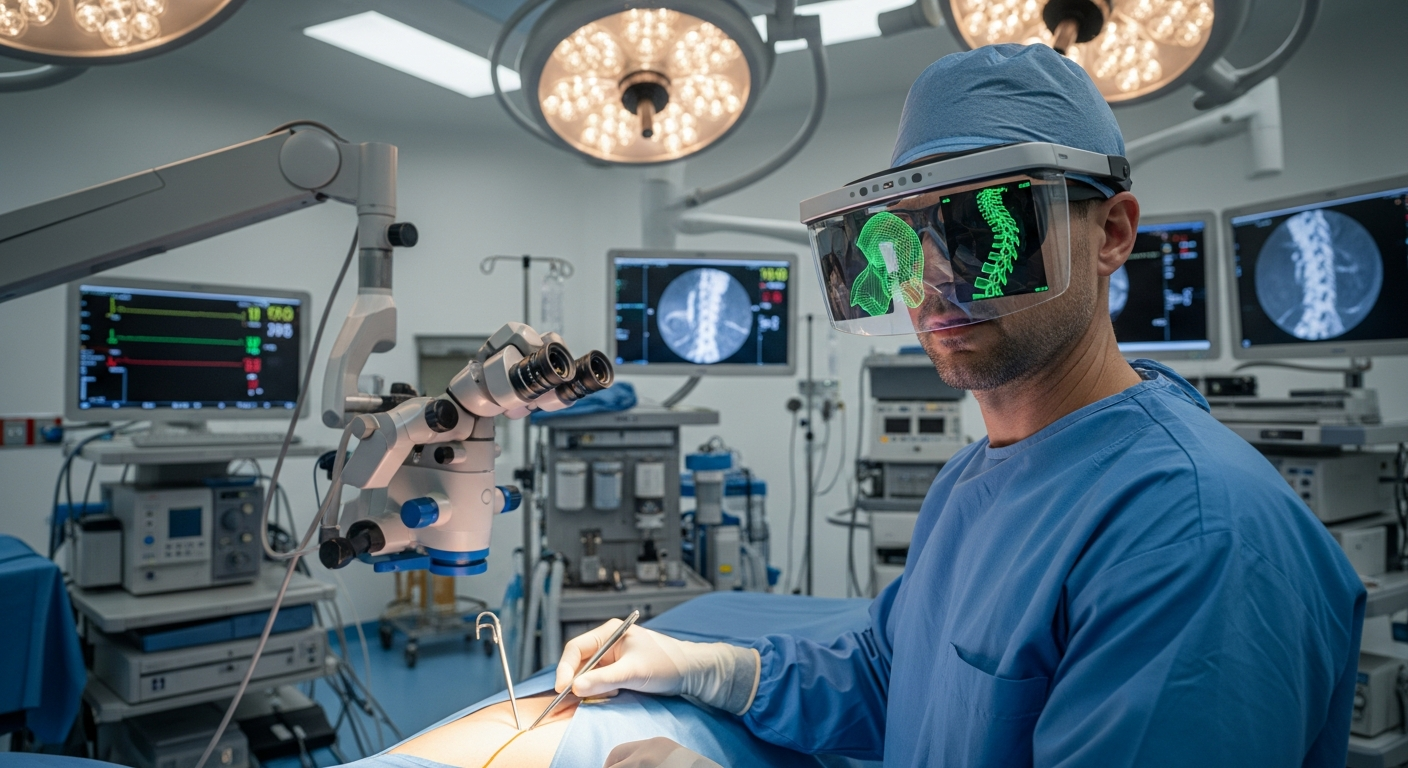
Augmented Reality in healthcare blends digital information—like 3D anatomy, medical data, or guidance systems—directly into the clinician’s real-world view. Using AR smart glasses, mobile devices, or headsets, medical professionals can visualize crucial information right when they need it.
Core functionalities include:
Real-time overlays during surgical procedures
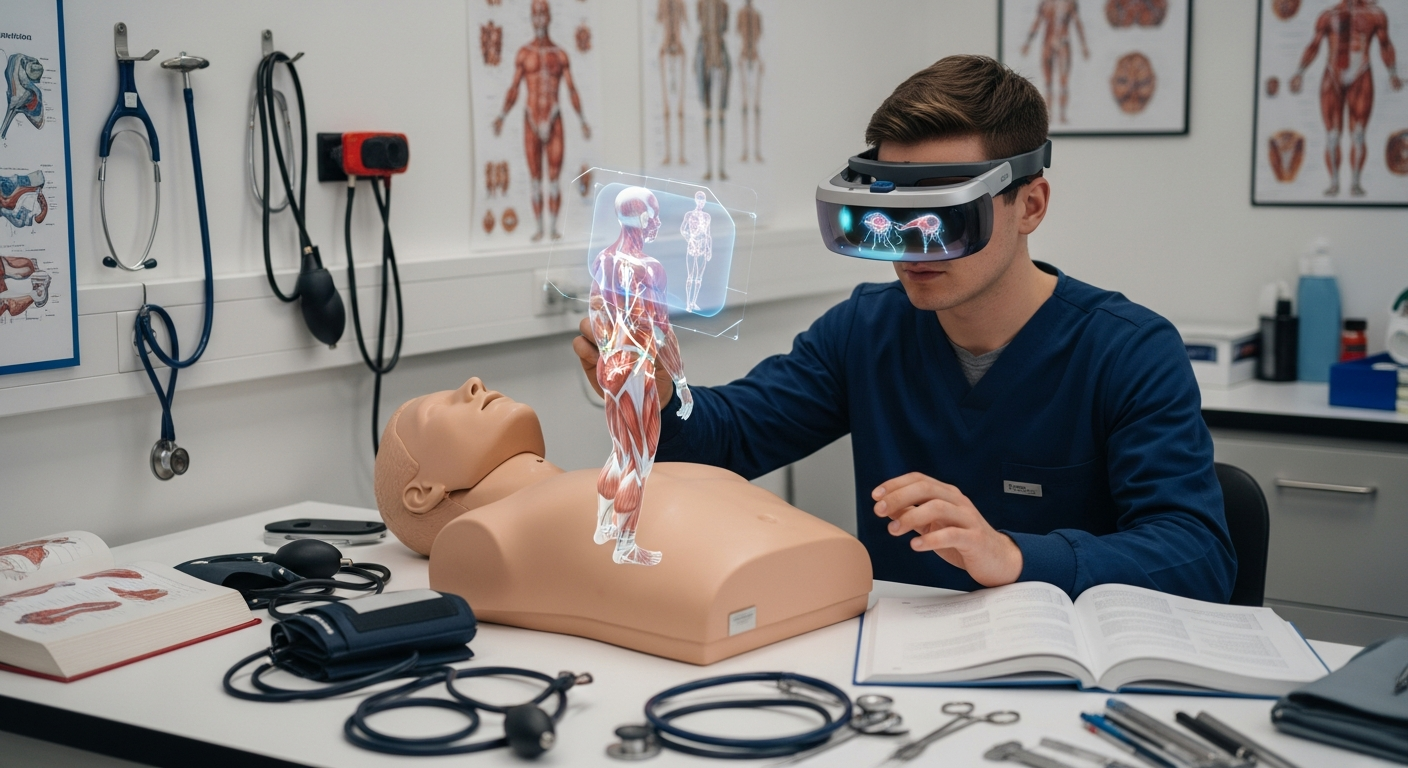
3D anatomy visualizations
Step-by-step procedural guidance
AR-enhanced medical simulations
Remote collaboration tools
Patient education models
AR bridges the critical gap between theoretical knowledge and hands-on application.
Why AR Matters for Doctors and Medical Students?
Doctors and students need clarity, precision, and practice in environments that are both high-pressure and high-consequence. AR supports them by transforming knowledge delivery and visual understanding.
AR enhances medical workflows by:
Reducing cognitive load
Enabling hands-free information access
Visualizing anatomy on real patients
Improving learning retention
Supporting diagnosis and real-time decision-making
The more complex the medical environment becomes, the more essential AR becomes in bridging knowledge and action.
AR for Medical Education & 3D Anatomy Learning
Traditional medical education relies heavily on textbooks, cadavers, and static images. AR brings anatomy to life with interactive 3D models that students can explore from any angle.
Benefits for medical students:
Real-time anatomical overlays during classes
Layered views of muscles, nerves, and organs
Interactive quizzes and task-based challenges
More engaging and memorable learning
Accessible learning anytime with mobile AR apps
Innovations in 3D medical training—like those explored in Mimic Health XR’s immersive education insights demonstrate how AR improves comprehension and retention dramatically.