Hospital safety practice spans more than infection control. This article focuses on a broader XR scenario library for emergency coordination, handoffs and equipment-related workflows. Infection-prevention educators can use the dedicated infection control guide for PPE, hand hygiene and isolation practice.
Organize the library by team responsibilities
For an emergency coordination scenario, specify which roles exchange information and who confirms the next action. For a handoff scenario, define the information the receiving team needs. For equipment-related practice, have the responsible team approve the task sequence and the limits of the simulated device.
Give each scenario an owner, an approved content source and a review date. Keep departmental procedures visible in the design brief instead of blending them into one generic safety lesson. After a rehearsal, ask teams which coordination problems the simulation exposed and which require changes outside training.
How to Build a Scenario Library for Hospital Teams
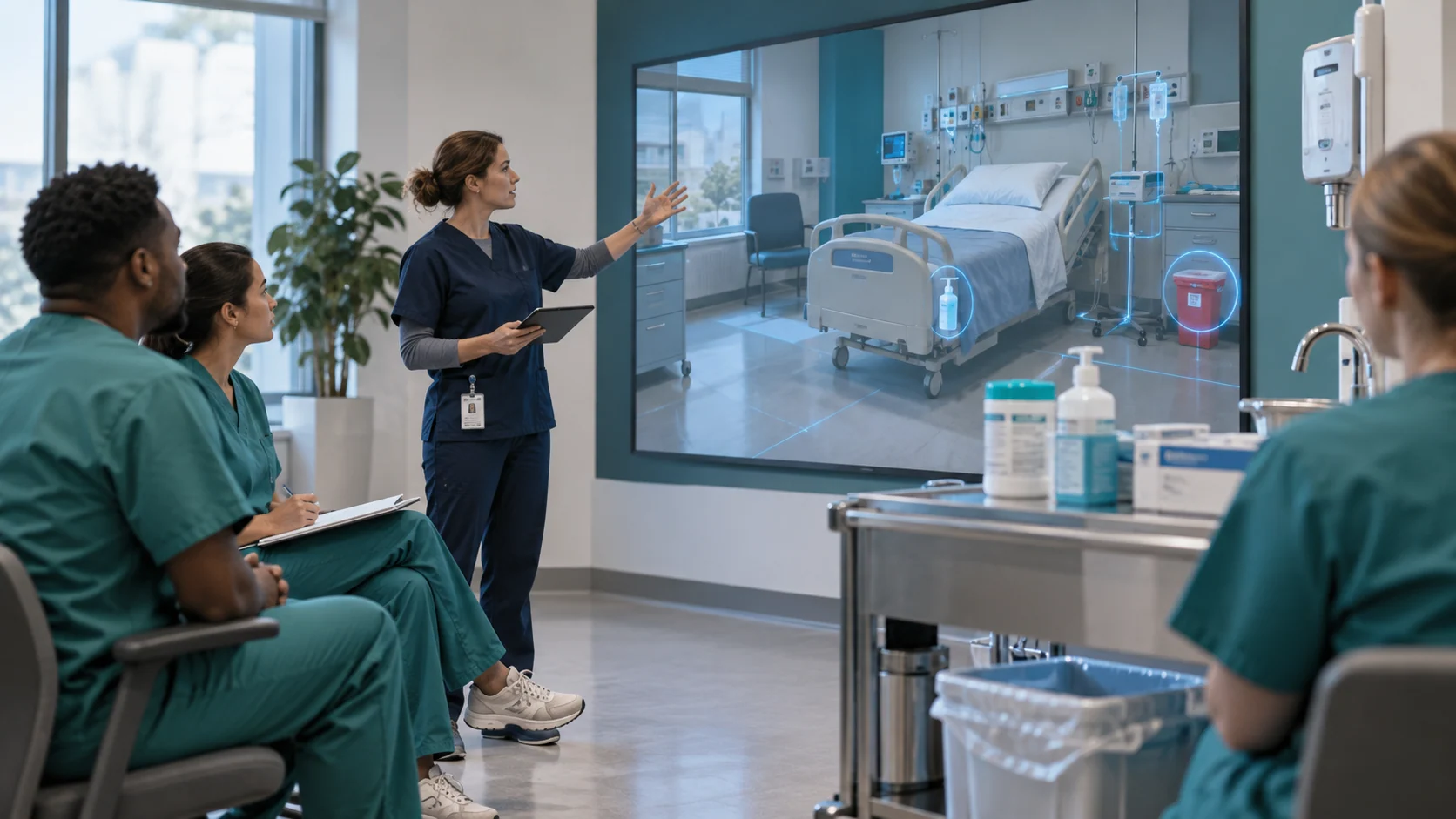
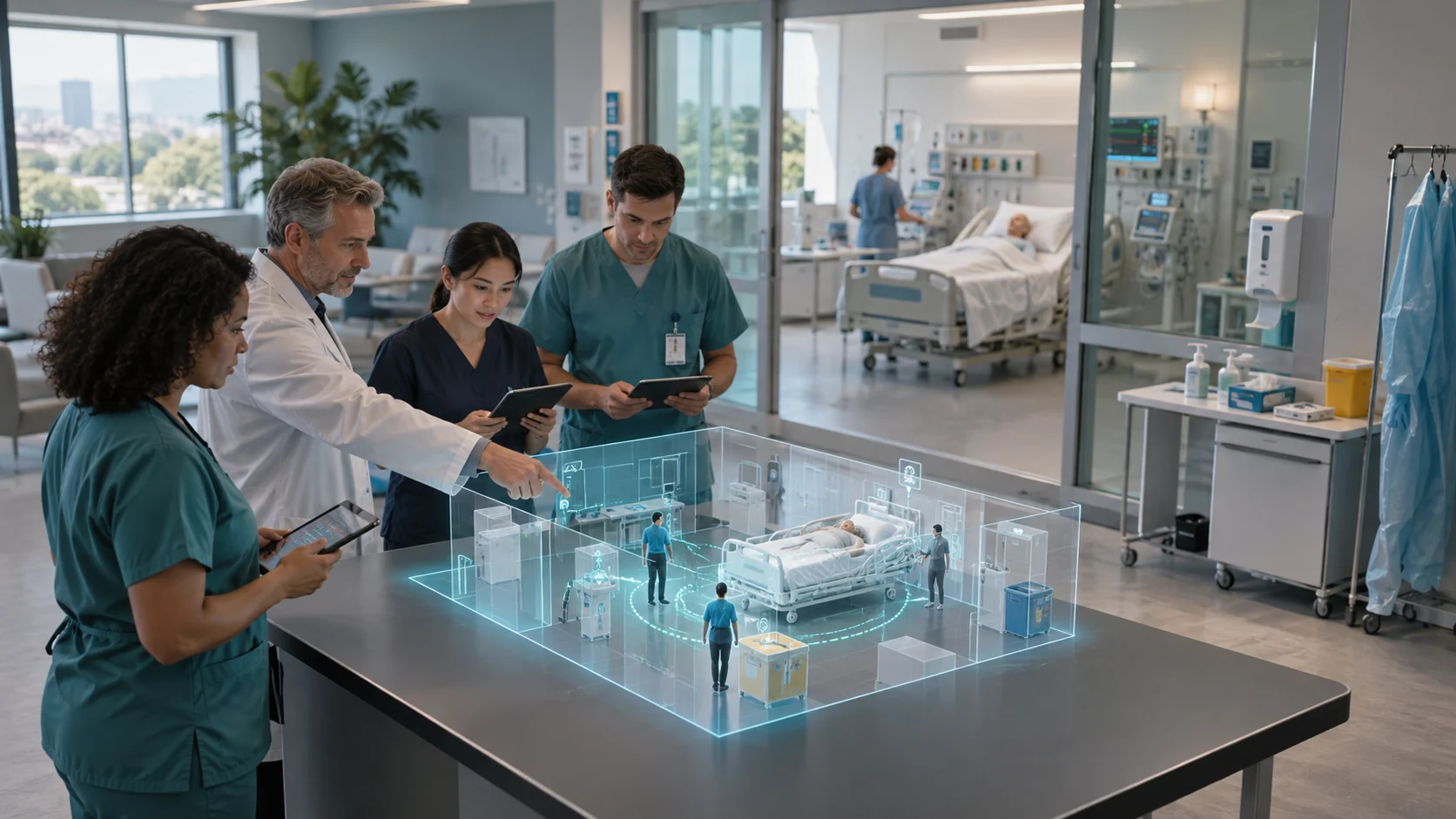
A useful scenario library starts with the real risk map of the organization. Infection-control teams, educators, department leads, and frontline staff should identify the routines that create the most variability. Then the XR team can convert those routines into repeatable modules with clear decisions, role expectations, and debriefing prompts.
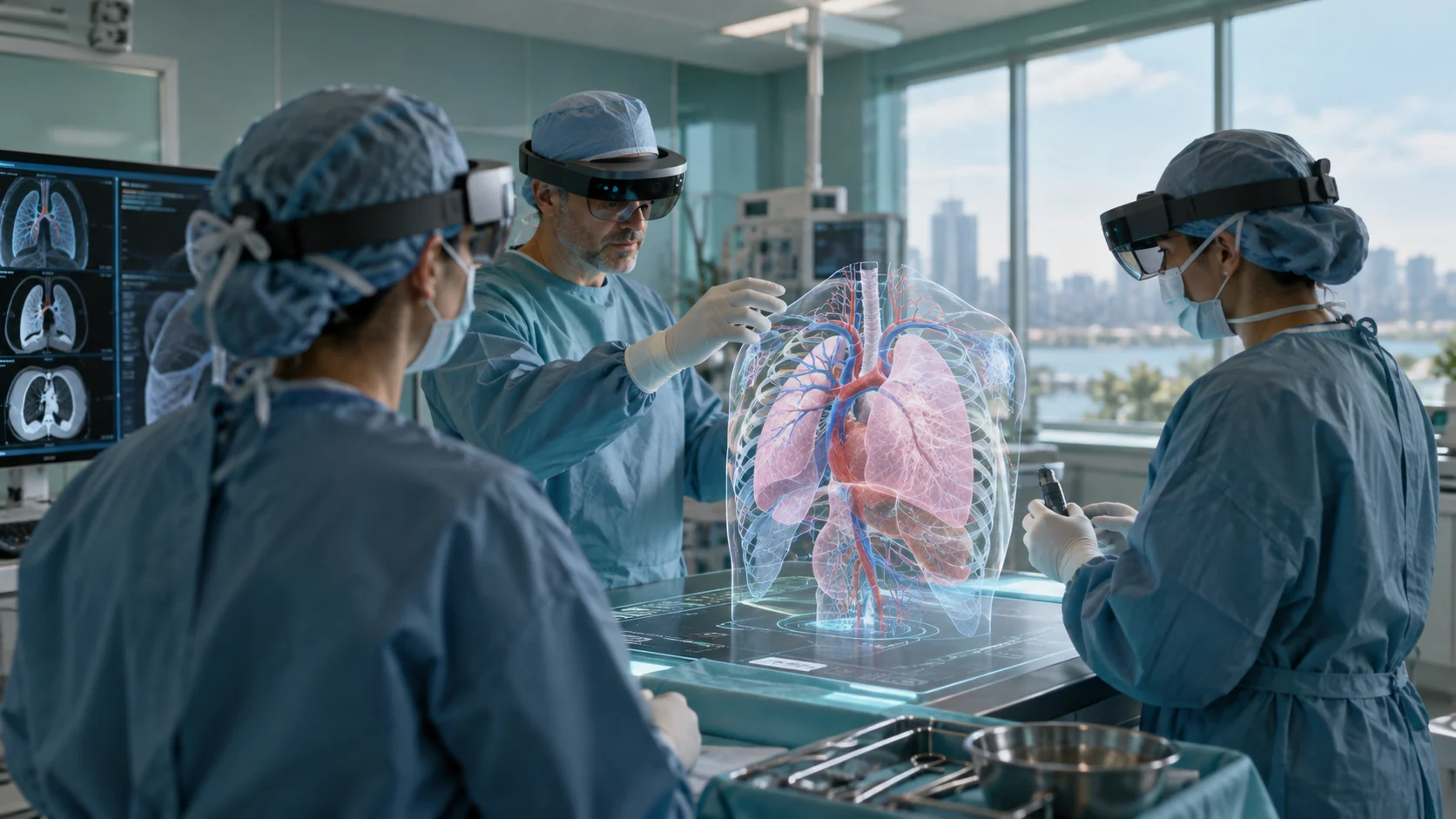
For example, a hospital may build scenarios for isolation-room entry and exit, environmental cleaning checks, emergency response in a contaminated zone, patient transport, visitor education, or device setup. More advanced programs can connect those modules with surgical planning and simulation when procedural teams need to rehearse room flow, equipment placement, and sterile-field awareness.
Each scenario should include a trigger, a correct path, common failure points, and a debriefing plan. The trigger could be a patient symptom, a missing supply, a team member asking a confusing question, or a device alarm. The failure points should mirror what educators actually see: skipped hand hygiene, poor verbal confirmation, incorrect disposal, or a rushed transition between clean and contaminated zones.
Scenario libraries should also be versioned. If a hospital changes its isolation policy, introduces a new device, modifies a unit layout, or updates cleaning responsibilities, the XR module should be revised in the same cycle. Otherwise, learners may practice an outdated workflow and educators may lose trust in the program. A practical rollout often starts with one department and one narrow behavior goal. Once the team sees measurable improvement, the library can expand into adjacent workflows.
Start with high-frequency workflows before rare emergencies.
Design each module for a specific role or team, not a generic learner.
Keep scenarios short enough to repeat, compare, and improve.
Use debrief questions that lead to behavior change, not blame.
Mimic Health XR can also connect scenario work with pharma and medtech visualization when hospitals or device teams need staff to understand how new tools affect safe workflow.
Where AI Avatars Improve Coaching and Recall
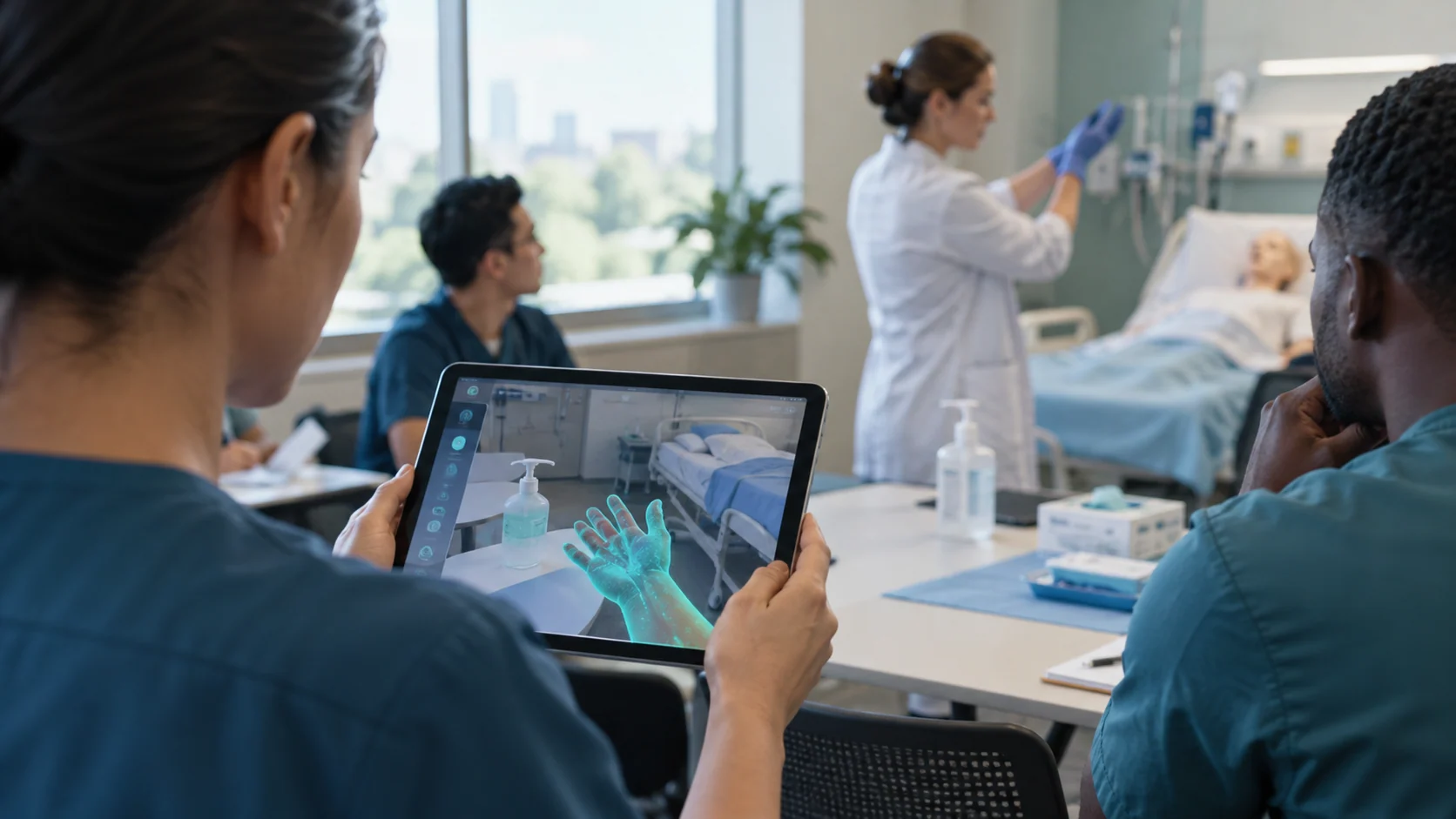
Immersive training becomes stronger when learners can practice communication, not just movement. AI avatars can act as patients, family members, colleagues, or virtual coaches inside a training pathway.
For infection control, this is important because staff often need to explain safety steps while doing them. A patient may be anxious about isolation. A family member may ask why they cannot enter a room. A colleague may challenge a step during a busy shift. AI-guided roleplay gives learners a place to practice calm, clear language before the real conversation happens.
The same approach supports patient education and engagement. Instead of treating education as a brochure or discharge paragraph, teams can rehearse how to explain precautions, home-care instructions, medication routines, or follow-up expectations in plain language.
AI avatar support should be practical. The goal is not to replace instructors. It is to extend practice time, capture patterns, and give learners another chance to refine their wording. Human educators still decide what good performance looks like and how each scenario should map to policy. This is especially helpful for new staff and rotating teams, because a learner can repeat a difficult conversation several times before handling it with a real patient or family member.
How to Measure Readiness Before Real-World Rollout
The best safety programs measure behavior, not just attendance. XR can help because a scenario creates observable actions: time to identify a risk, completion of critical steps, sequencing errors, communication quality, and whether the learner recovered after a mistake.
Measurement should be simple enough for educators to use. A readiness score can include completion, accuracy, hesitation points, and debrief themes. Over time, leaders can see whether a unit needs more practice on donning and doffing, patient transport, room setup, or escalation communication.
Hospitals using telehealth and remote consultation can also adapt the same thinking to virtual care: privacy, escalation, patient identity checks, remote monitoring, and digital handoffs all benefit from scenario-based rehearsal.
In rehabilitation settings, immersive readiness can support safe movement, fall-risk awareness, and home-exercise coaching. That connects naturally with rehabilitation and physical therapy programs where patient safety depends on both clinical judgment and repeated guided practice.
Readiness data should lead to action. If multiple learners miss the same step, the answer may not be more reminders. The policy may need clearer language, the room may need a better visual cue, or the training scenario may need a stronger prompt. Educators observe the simulation, infection-control teams review recurring risks, operational leaders adjust the environment, and staff return to practice the improved workflow.
Track a few meaningful behaviors rather than every possible metric.
Compare performance by scenario, role, and cohort.
Use the findings to revise protocols, room setup, and coaching.
Re-run scenarios after changes so improvement is visible.
This site loads images and fonts from external services. Any cookies or analytics already configured operate independently of this notice. Dismiss saves only this notice’s dismissed state in your browser. It does not change tracking settings or send a consent choice to any service. If browser storage is unavailable, dismissal lasts only for the current page.