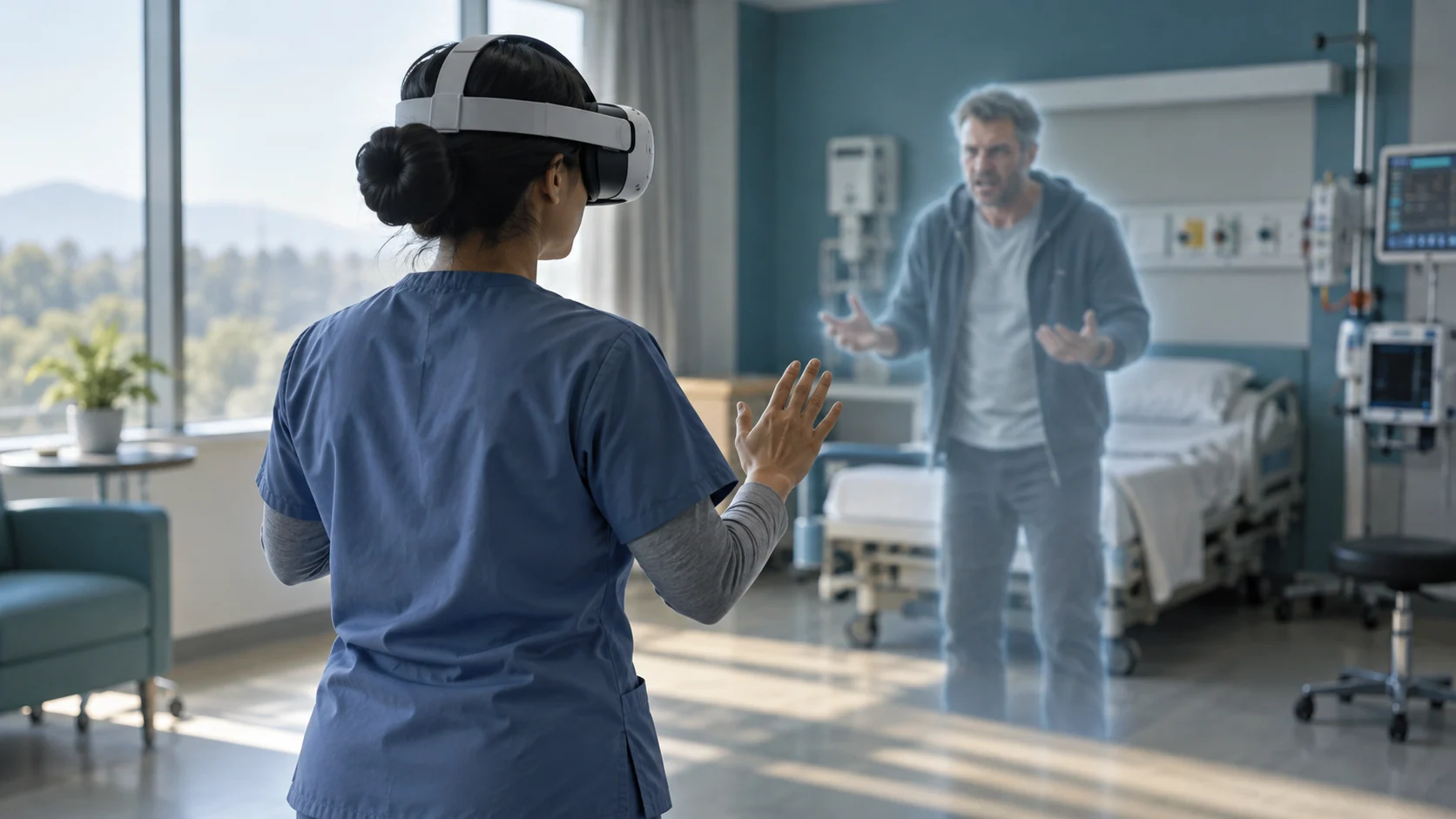
A de-escalation curriculum needs a learning sequence, time for facilitated practice and a clear assessment plan. This guide is for training leads organizing XR sessions for healthcare workers. It focuses on curriculum design and staff delivery rather than repeating the technique guide or treating simulation scores as proof of workplace safety.
Plan the learning sequence and facilitator capacity
Map each approved learning objective to preparation, a practice activity and a debriefing question. State prerequisites and how learners can access an alternative activity. Allocate facilitator time for setup, observation and discussion, not just the minutes spent wearing a headset.
Agree when learners repeat scenarios and how educators record progression. Pilot the timetable with a small cohort to identify bottlenecks in equipment and feedback. Revise the course using learner and facilitator observations before scheduling it across departments.
What De-Escalation Training for Healthcare Workers Covers
De-escalation is a structured effort to reduce emotional intensity, preserve dignity, and create enough safety for communication and care to continue. It is not simply speaking softly. In healthcare, staff may need to combine empathy, observation, boundary setting, environmental awareness, team coordination, and clinical judgment while a person is frightened, confused, in pain, intoxicated, overstimulated, or angry about delays.
A strong program begins with prevention. Learners practice noticing changes in voice, posture, pacing, personal space, attention, and cooperation. They also examine situational contributors such as noise, crowding, long waits, unclear instructions, cultural differences, sensory needs, trauma histories, or conflicting messages from staff. Identifying these factors early can create more options than waiting for an encounter to become dangerous.
Communication practice should include respectful introductions, plain-language explanations, active listening, validation without making unsafe promises, appropriate choices, and concise limits. Staff need to distinguish a feeling from a demand: they can acknowledge fear or frustration while still protecting clinical standards. The goal is a workable next step, not winning an argument.
Training should also clarify when conversational de-escalation is no longer appropriate. An immediate threat, weapon, rapidly changing medical condition, or inability to maintain a safe distance may require emergency procedures. Scenario design must align with local policy, professional roles, and the organization’s hospital training and safety protocols.
Recognize behavioral, environmental, and clinical warning signs.
Use language that lowers uncertainty and preserves autonomy.
Maintain safe positioning, exits, distance, and team awareness.
Set respectful limits and offer realistic choices.
Call for help, hand over, or exit according to policy.
Document and debrief the encounter without blaming the patient or staff member.