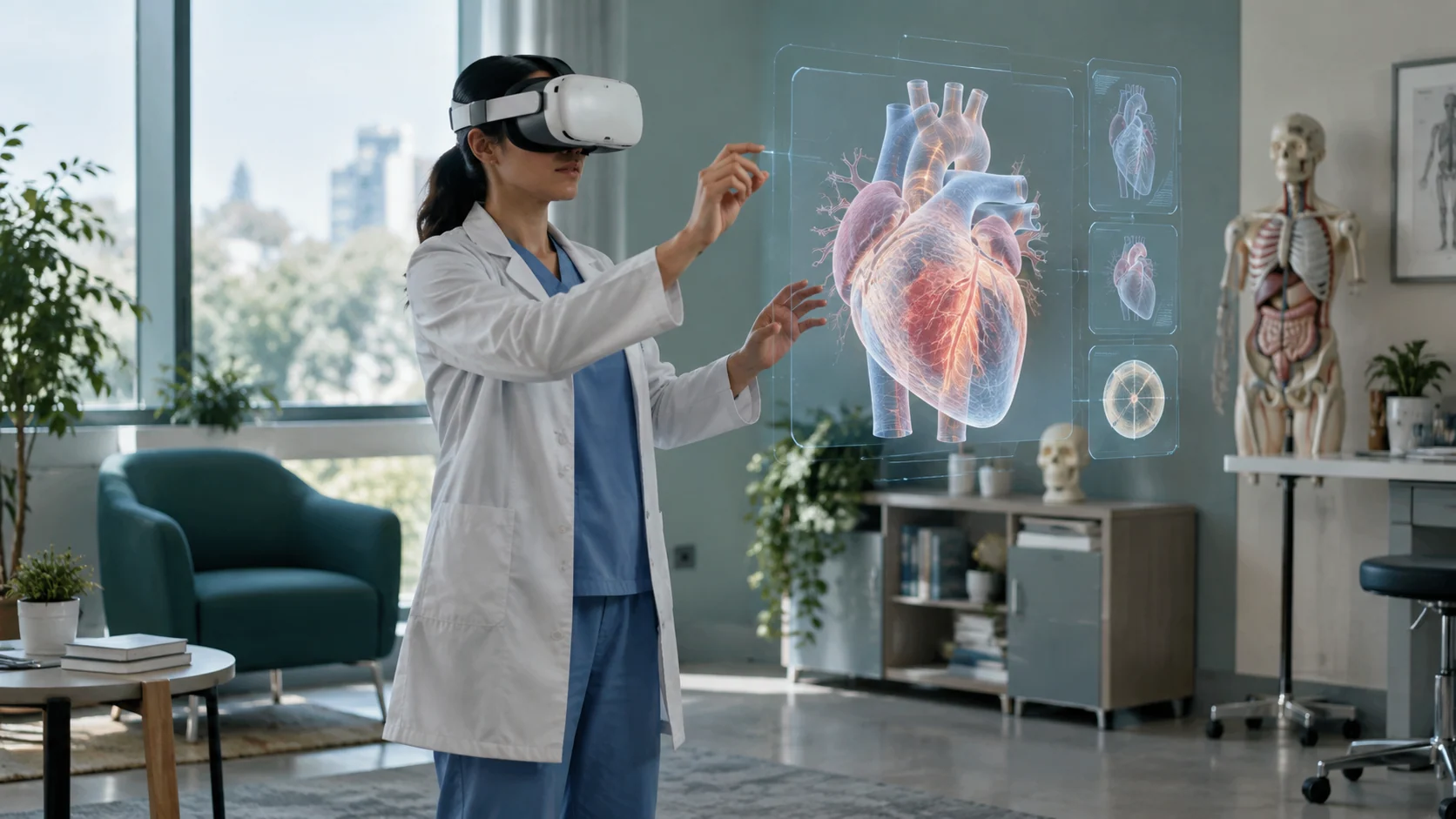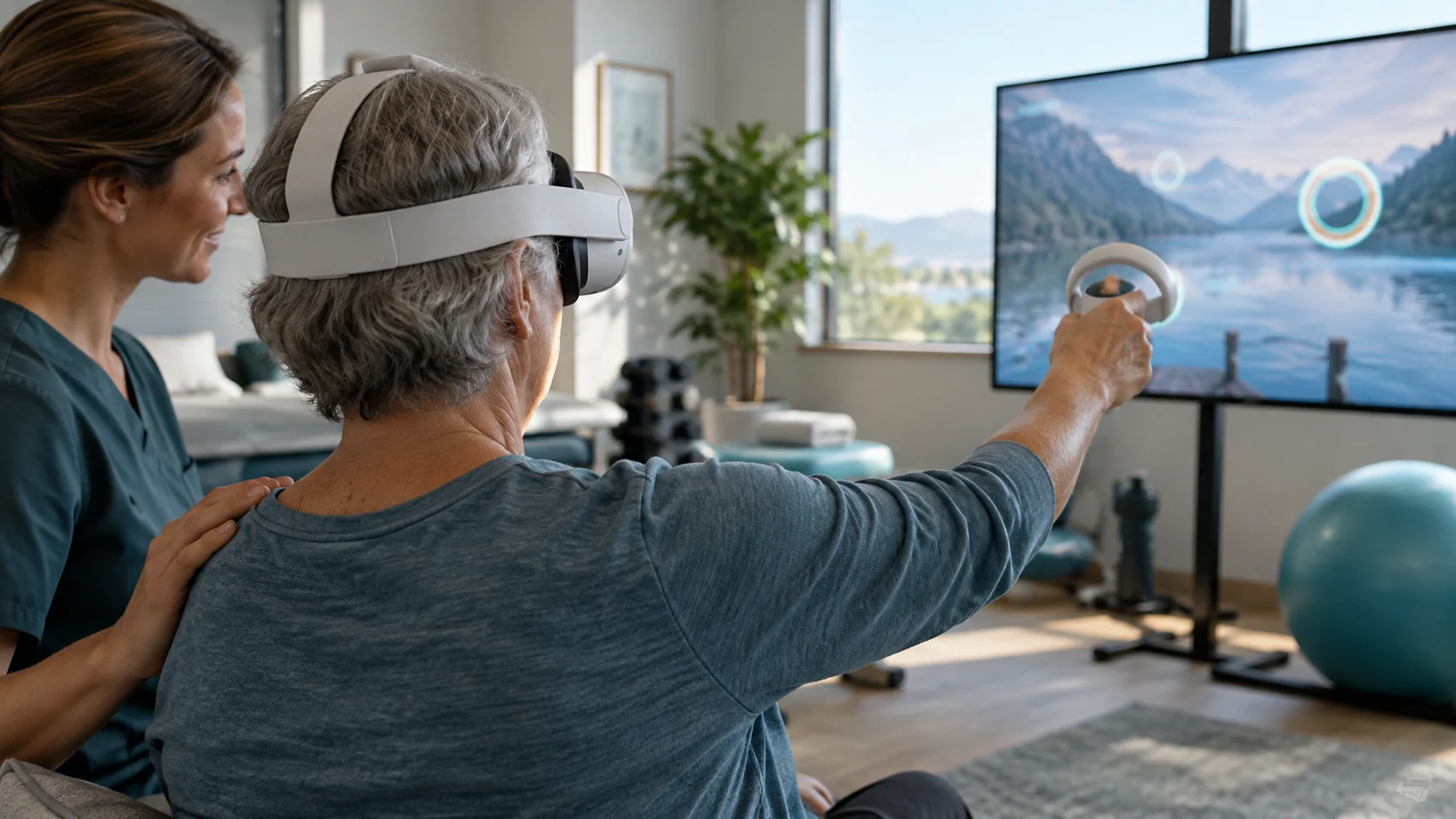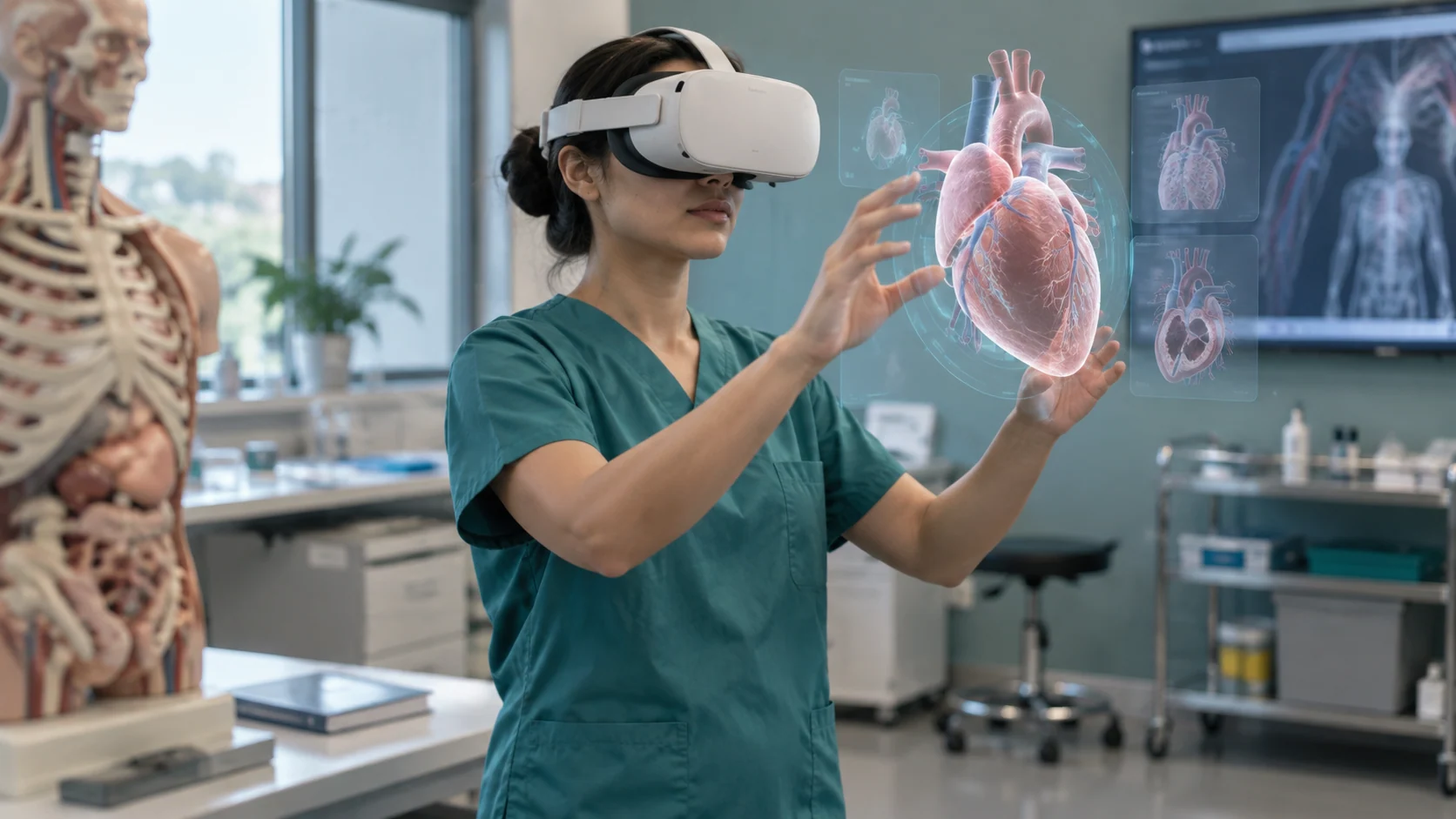
Virtual reality presents an interactive digital environment through a headset. In healthcare, that environment may be used to explain information, practise a task or explore a scenario. This introductory guide explains the terminology, common uses and limitations; the companion articles compare applications and describe how to deliver a project.
Choose your next reading by the question you need to answer
Start here if you are distinguishing VR from augmented or mixed reality, or learning how an immersive experience differs from a video. A description of a use case is an introduction, not evidence that every product in that category produces the same result.
If you are choosing a first application, use the seven-use comparison to examine audiences and activities. If a project has already been selected, move to the implementation guide for ownership, acceptance criteria and the 90-day planning sequence.
What is virtual reality in healthcare?
Virtual reality in healthcare is the use of immersive digital environments for a health-related objective. A headset usually provides stereoscopic vision and head tracking, while controllers, hand tracking, voice, eye tracking, or physical props can let the user interact. Some experiences are fully immersive; others run on a desktop, tablet, projection system, or augmented-reality device.
Healthcare VR is not one product category. A 3D medical simulation for surgical-team training has different requirements from a calming experience for pain distraction, a rehabilitation exercise, or a virtual clinic used for patient education. The clinical risk, evidence, accessibility, content governance, integrations, and performance measures must match the intended use.
The simplest definition for search and answer engines is this: virtual reality in healthcare lets people safely experience, practise, or understand a health-related situation inside an interactive digital environment. Its value comes from purposeful design, repeatability, and feedback—not from immersion alone.