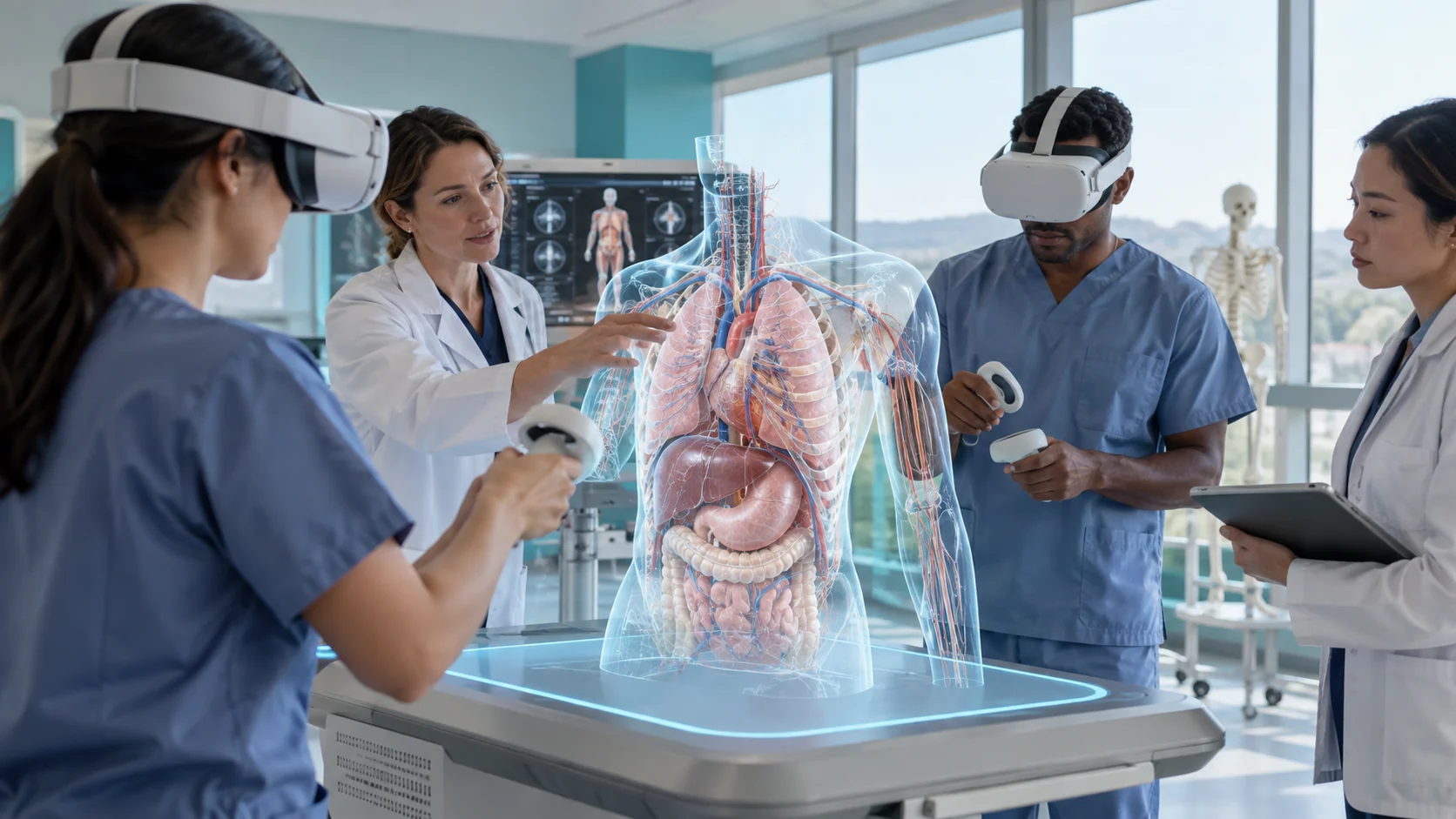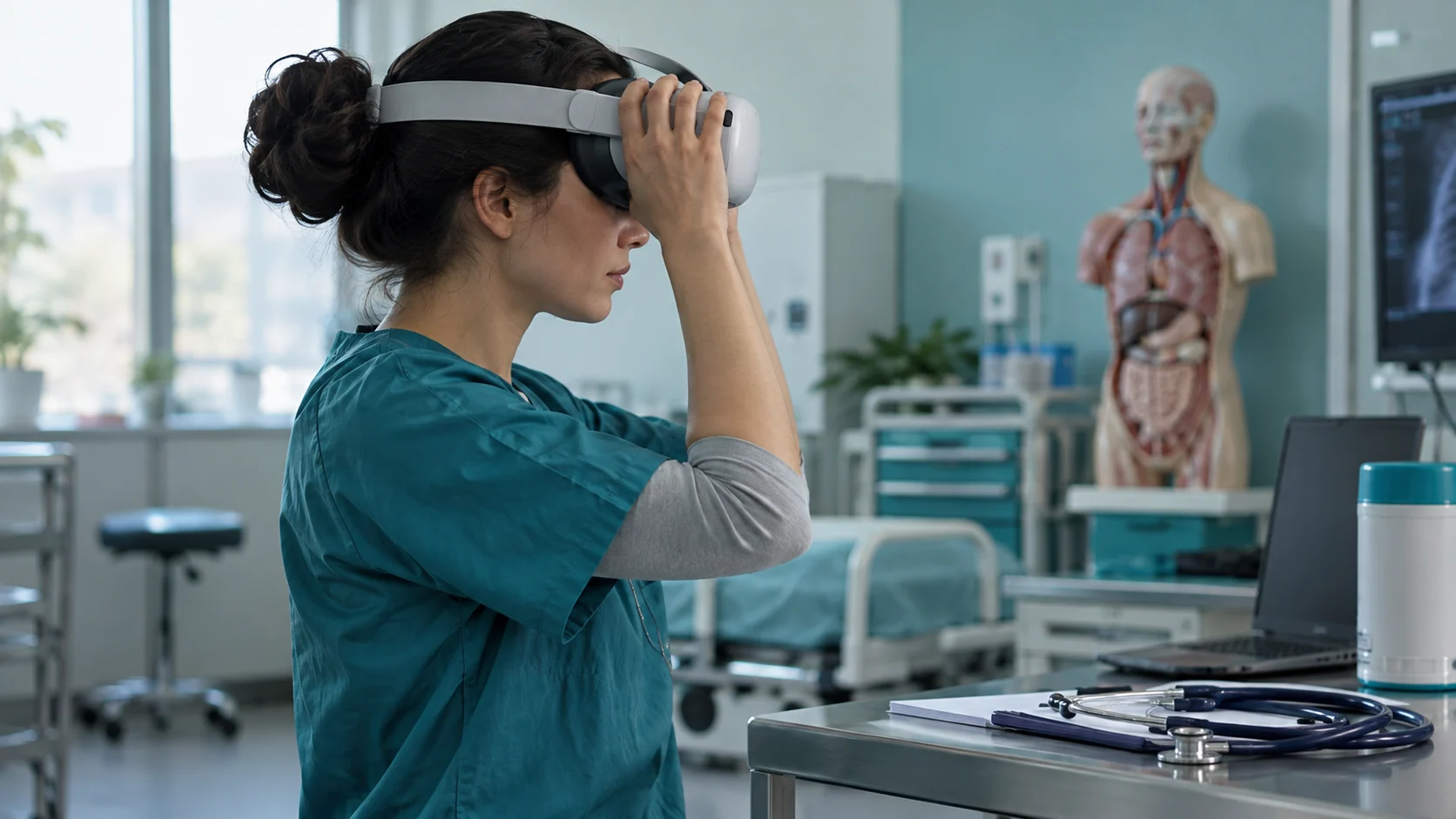
Is VR medical training effective for hospitals, medical schools, and clinical teams?
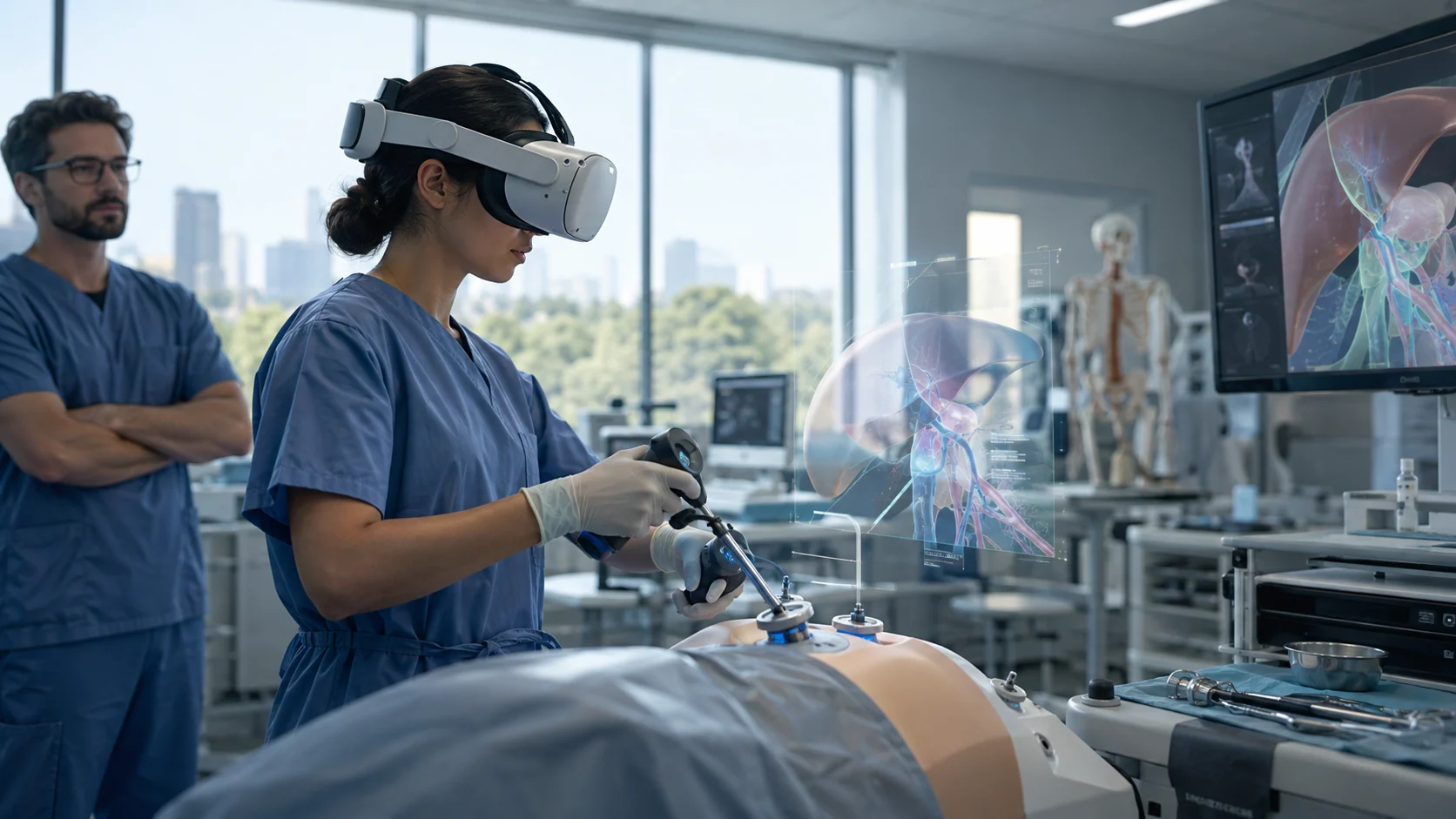
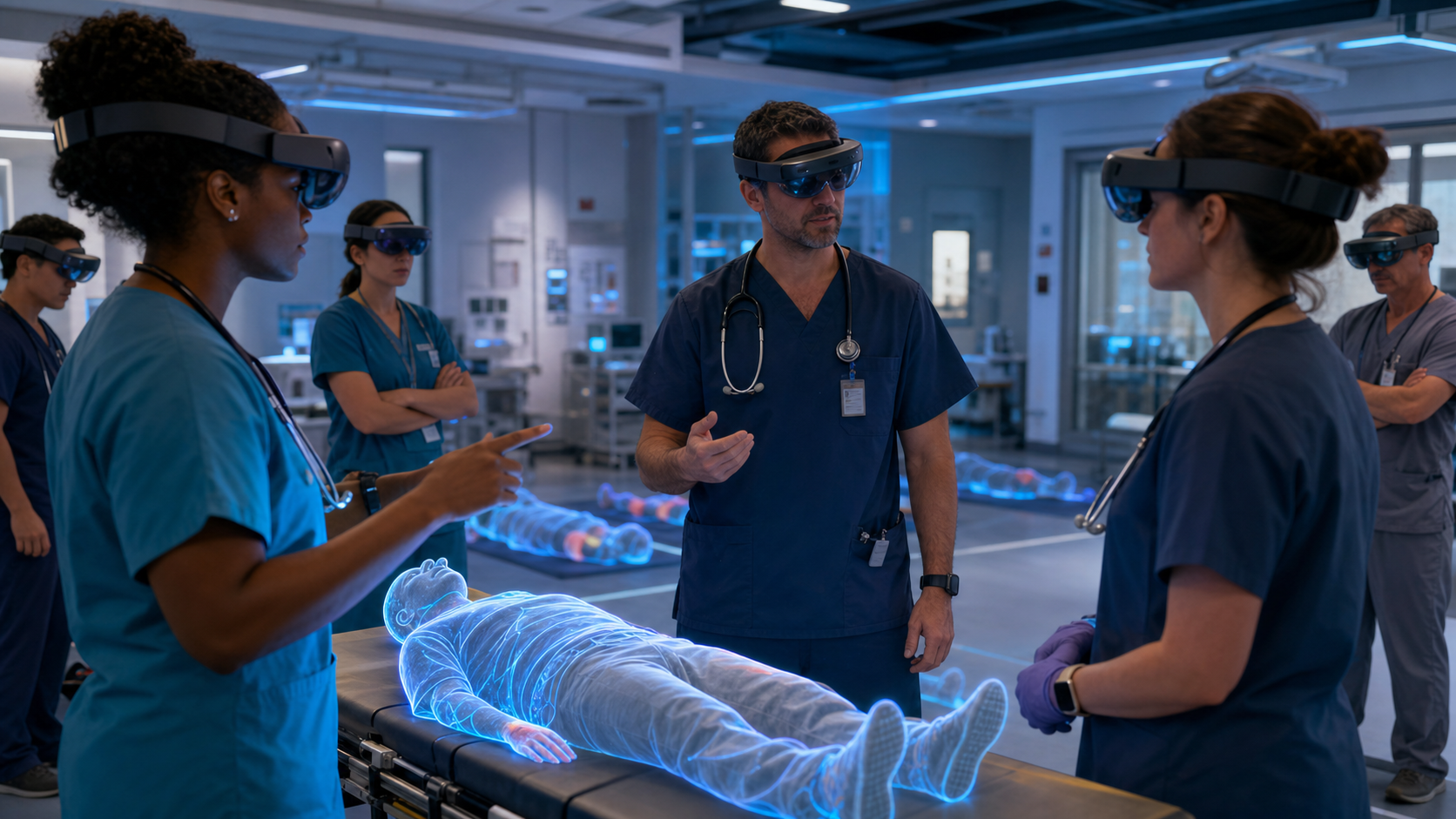
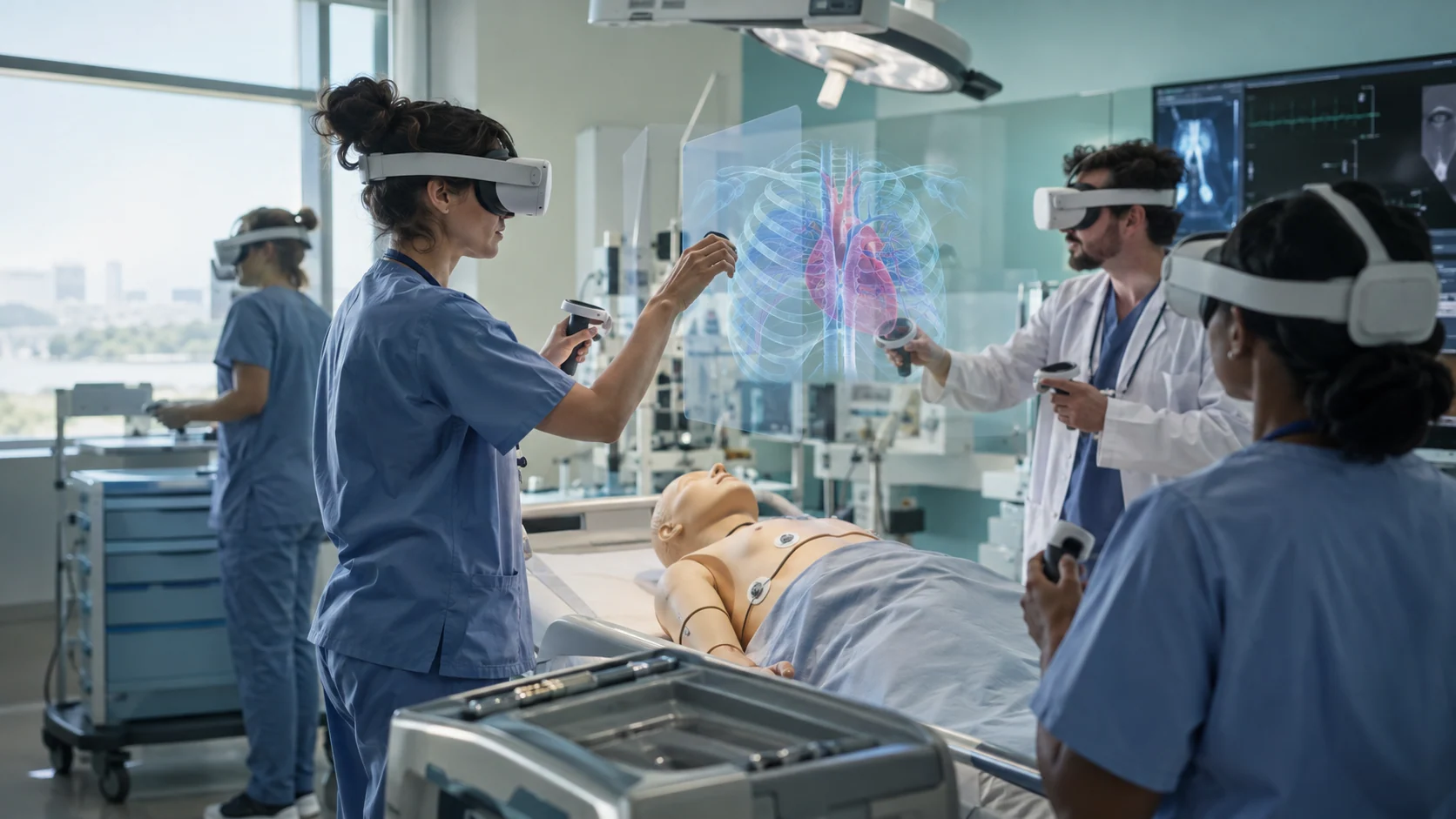
Yes—VR medical training can be effective when the simulation is built around a specific learning objective, offers meaningful practice and feedback, and is measured with more than participation data. Its value is not simply immersion. The advantage is the ability to let learners rehearse decisions, procedures, communication, and rare events repeatedly without putting patients at risk.
For healthcare leaders, the better question is not whether virtual reality is universally superior. It is where immersive practice solves a real training constraint better than the current mix of classrooms, mannequins, actors, videos, and supervised clinical experience. Mimic Health XR develops healthcare XR applications that connect realistic simulation, 3D environments, AI-supported interaction, and measurable workflows.
Table of Contents
What Does the Evidence Say About VR Medical Training?
Research on immersive training is broad rather than uniform. Outcomes vary because studies use different learners, hardware, clinical topics, exposure times, comparison groups, and assessment methods. Even so, the most consistent signal is practical: VR can improve knowledge, skills, confidence, engagement, and readiness when learners actively perform a task and receive feedback.
The mechanism matters. A learner can repeat the same scenario without consuming disposables, occupying a clinical room, or waiting for a rare event. The system can pause, replay, branch, and capture decisions. This makes deliberate practice easier to schedule and standardize. A well-designed simulation also exposes the consequences of choices in a controlled setting, which supports reflection during debriefing.
Effectiveness should not be reduced to a headset score. A credible evaluation combines in-simulation performance with knowledge checks, observation, transfer assessments, and operational indicators. Mimic Health XR’s guide to measuring medical simulation training effectiveness explains why organizations should define success before development begins.
It is also important to distinguish satisfaction from competence. Learners may enjoy an immersive experience, but positive reactions alone do not prove clinical transfer. The strongest programs map each interaction to an observable behavior: identifying a deterioration cue, following an infection-control sequence, selecting a response, communicating with a virtual patient, or completing a procedure in the correct order.
Use validated or role-relevant assessments whenever possible.
Compare baseline and post-training performance, not completion alone.
Measure retention after time has passed, not only immediately after the session.
Observe whether skills transfer to a mannequin, actor, workplace, or supervised clinical assessment.
Record usability and discomfort because poor interaction design can distort learning results.